
Which practice for warning traffic about your stopped vehicle is the right one?
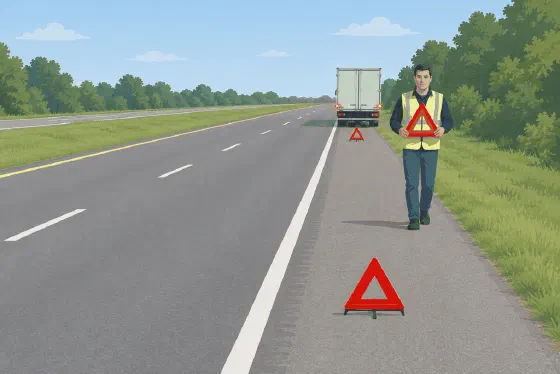
Correct answer: If a hill or curve hides your vehicle from drivers behind you within 500 feet, set the rear triangle farther back.
Answer options
- AWarning triangles are needed only when you expect the vehicle to stay stopped for 30 minutes or longer.
- BLeaving the taillights on is the proper way to warn drivers who are coming up behind your stopped vehicle.
- CIf a hill or curve hides your vehicle from drivers behind you within 500 feet, set the rear triangle farther back. Correct
Why
Warning triangles only help if approaching drivers can see them in time, so when a hill or curve blocks the view, the rearmost one goes farther back. They must be set out soon after any stop on the road or shoulder, not just long ones, and taillights alone can make other drivers think the vehicle is still moving.
About this question
Topic: CDL general knowledge License: CDL
Part of these practice sets:
Where it applies: Asked in every state.
Practice the whole set
This question is part of Crash Scenes and Vehicle Fires (13 questions). Take the full set and check your score.
Practice Crash Scenes and Vehicle FiresMore questions from Crash Scenes and Vehicle Fires
- At a crash scene, which of these is the wrong way to care for injured people?
- What should be done with a tire that is on fire?
- When you use a fire extinguisher, which practice is correct?
- At a crash scene, what danger can flares create if they are used carelessly?
- Which kind of fire is it safe to fight with water?
- When you stop at a crash scene like this one, which step helps keep a second crash from happening?
- To protect yourself while placing reflective warning triangles, you should:
- You are forced to pull over and park at the edge of a flat, straight road with one lane in each direction. How should you set out your reflective triangles?
Practice on your phone.
Practice here in your browser, or use the app with the same questions and explanations. It's free on the App Store.