
Car permit · Following distance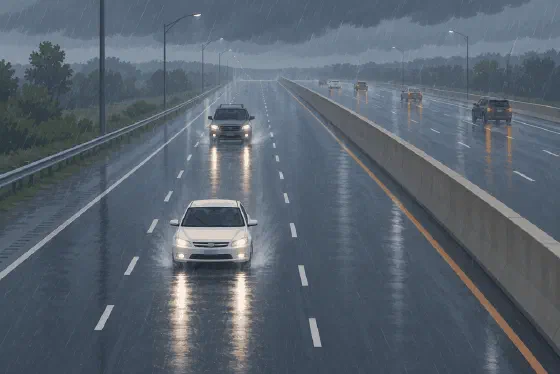
Heavy rain has left the pavement wet. What should you do?
Correct answer: Leave more space between you and the vehicle in front.
Answer options
- ALeave more space between you and the vehicle in front Correct
- BKeep a two-second gap behind the vehicle in front
- CStay about one vehicle length behind the car ahead
Why
Water on the pavement makes stopping take longer, so open up a gap of at least 4 to 5 seconds behind the vehicle ahead. Brake, steer and accelerate gently to avoid skidding.
Tip On wet pavement, plan on about twice your usual following distance so you have room to stop.
About this question
Topic: Following distance License: Car permit
Part of these practice sets:
- Alabama: State Practice Set
- Arkansas: State Practice Set
- Arizona: Road Rules
- California: Road Rules
- Colorado: State Practice Set
- Connecticut: State Practice Set
- District of Columbia: State Practice Set
- Delaware: Road Rules
- Florida: Road Rules
- Georgia: State Practice Set
- Hawaii: Road Rules
- Iowa: Road Rules
- Idaho: Road Rules
- Illinois: Road Rules
- Indiana: State Practice Set
- Kansas: Road Rules
- Kentucky: State Practice Set
- Louisiana: Road Rules
- Massachusetts: State Practice Set
- Maryland: State Practice Set
- Michigan: Road Rules
- Minnesota: Road Rules
- Missouri: State Practice Set
- Mississippi: Road Rules
- North Carolina: State Practice Set
- Nebraska: Road Rules
- New Hampshire: Road Rules
- New Jersey: Road Rules
- New Mexico: Road Rules
- Nevada: Road Rules
- New York: Road Rules
- Ohio: State Practice Set
- Oklahoma: Road Rules
- Oregon: Road Rules
- Pennsylvania: Road Rules
- Puerto Rico: State Practice Set
- South Carolina: State Practice Set
- Tennessee: State Practice Set
- Texas: Road Rules
- Utah: Road Rules
- Virginia: Road Rules
- Washington: Road Rules
- Wisconsin: Road Rules
- West Virginia: Road Rules
Where it applies: Used in practice sets for:
- Alabama
- Arkansas
- Arizona
- California
- Colorado
- Connecticut
- District of Columbia
- Delaware
- Florida
- Georgia
- Hawaii
- Iowa
- Idaho
- Illinois
- Indiana
- Kansas
- Kentucky
- Louisiana
- Massachusetts
- Maryland
- Michigan
- Minnesota
- Missouri
- Mississippi
- North Carolina
- Nebraska
- New Hampshire
- New Jersey
- New Mexico
- Nevada
- New York
- Ohio
- Oklahoma
- Oregon
- Pennsylvania
- Puerto Rico
- South Carolina
- Tennessee
- Texas
- Utah
- Virginia
- Washington
- Wisconsin
- West Virginia
Practice the whole set
This question is part of State Practice Set (37 questions). Take the full set and check your score.
Practice State Practice SetMore questions from State Practice Set
- Which signal, given with the hand and arm, lets other drivers know you intend to make a right turn?
- You are following a school bus when its red lights start flashing to signal a stop. What does the law require you to do?
- While traveling on a major highway, a driver should:
- One of your tires suddenly blows out while you are driving. What should you do?
- Slippery when wet: Which habit helps keep your vehicle from skidding when the road is slippery?
- When are you allowed to leave the pavement and use the edge of the road to get around another vehicle?
- When you leave your car parked on a slope, how should the front wheels be set?
- Under Alabama's graduated licensing rules, a Stage II restricted license holder (a 16-year-old, or a 17-year-old licensed for less than 6 months) is not allowed to drive during which hours?
Practice on your phone.
Practice here in your browser, or use the app with the same questions and explanations. It's free on the App Store.