
Based on the mirror coverage and blind spots marked in the picture, which steps make up a safe lane change?
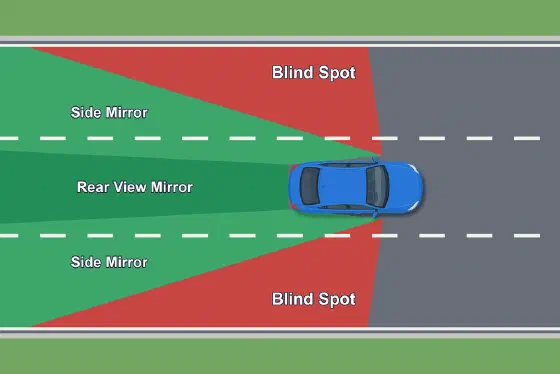
Correct answer: Signaling, checking the mirrors, and doing a head check toward the new lane.
Answer options
- ASignaling, checking the mirrors, and doing a head check toward the new lane Correct
- BSignaling and checking the mirrors, which show everything beside you
- CSignaling and doing a head check, with no need for the mirrors
Why
The mirrors show traffic behind you, but only a quick head check reveals the red blind-spot areas beside the car, so a safe lane change uses the signal, the mirrors, and the head check together. Skip the mirrors or the head check and you can miss a vehicle behind or beside you; skip the signal and other drivers get no warning.
About this question
Topic: Passing and lanes License: Car permit
Part of these practice sets:
Where it applies: Used in practice sets for:
Practice the whole set
This question is part of State Practice Set (32 questions). Take the full set and check your score.
Practice State Practice SetMore questions from State Practice Set
- When does the law require you to have your headlights on while driving?
- When are you required to yield to an emergency vehicle? (Road Rules) · Question 564
- When you parallel park along the curb on a flat street, what should you do?
- In the middle of a rainstorm or snowfall, your wipers stop moving. Which of these actions are appropriate?
- In which situation should you tap the brakes so your brake lights blink, or use your hazard flashers?
- Which of these actions is forbidden while you drive through a school zone like this one?
- You are following a school bus when it stops and its red lights begin to flash. What does the law require of you?
- In which of these situations does the law require you to bring your vehicle to a stop? (Road Rules)
Practice on your phone.
Practice here in your browser, or use the app with the same questions and explanations. It's free on the App Store.