
A double yellow line divides the two directions of traffic. When are you allowed to cross it in order to pass?
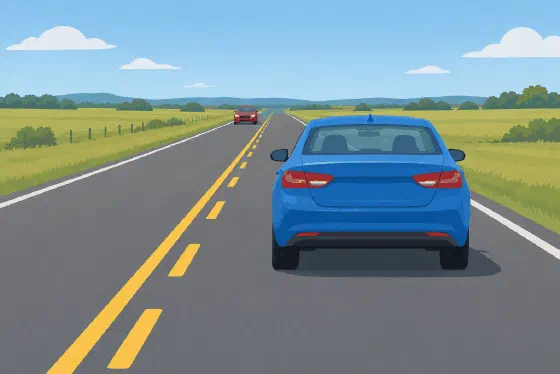
Correct answer: When the yellow line closest to your lane is broken.
Answer options
- AWhen the yellow line closest to your lane is broken Correct
- BWhen the yellow line closest to oncoming traffic is broken
- CWhen the yellow line closest to your lane is solid
Why
When two yellow lines run side by side, the one on your side tells you whether passing is allowed: a broken line next to your lane lets you pass when it is safe, while a solid line on your side means no passing. In the picture, the blue car has the broken line on its side and may pass, but the red car has the solid line and may not.
About this question
Topic: Passing and lanes License: Car permit
Part of these practice sets:
Where it applies: Asked in every state. Compare permit tests by state
Practice the whole set
This question is part of Final Knowledge Exam (35 questions). Take the full set and check your score.
Practice Final Knowledge ExamMore questions from Final Knowledge Exam
- At night, an oncoming driver fails to switch from high beams to low beams. What should you do?
- Up ahead, a person is walking across your lane where there is no crosswalk. How should you respond?
- Speed limit 50, minimum 30: What does the sign shown tell you about speed on this road?
- As you near an intersection, you notice that its traffic signal is flashing yellow. What are you expected to do?
- During a long trip, what helps prevent drowsiness?
- Which signal made with your hand and arm lets other motorists know that you intend to turn right?
- Drivers who snack or sip a beverage while driving are more likely to:
- Which of these does NOT affect a person's blood alcohol concentration (BAC)?
Practice on your phone.
Practice here in your browser, or use the app with the same questions and explanations. It's free on the App Store.