Sign Shapes, Colors and Rules — Permit Practice Test
Regulatory signsKeyboard: A · B · C · Enter
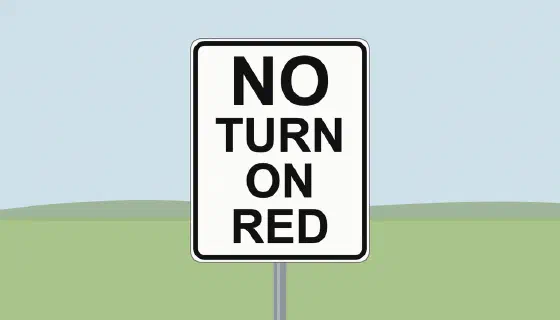
What does this sign require of drivers?
Why it's A: No turns may be made while the light is red.
Normally you may turn right on a red light after a full stop, but this sign cancels that permission. Stay stopped and make your turn only after the signal changes to green.
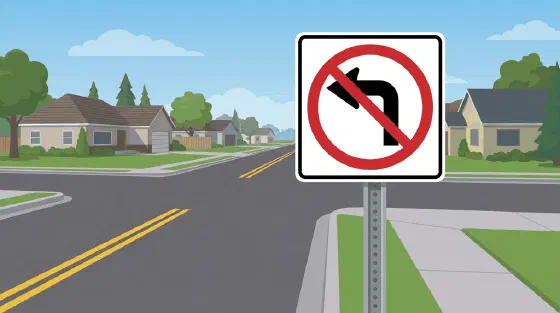
A red circle with a slash across a symbol bans the action shown, and here the symbol is an arrow bending left. Continue straight or choose a different route instead of turning left at this spot.
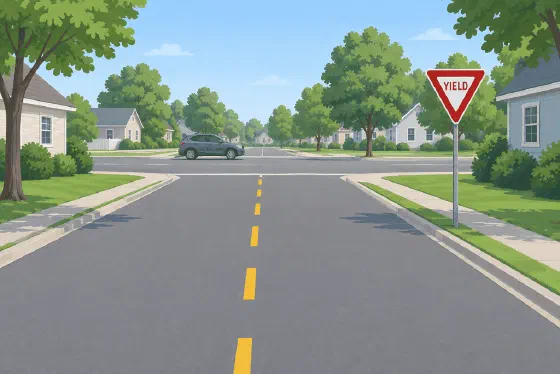
At an intersection, a triangular sign colored red and white tells you to:
Why it's C: Reduce speed and be ready to come to a stop if needed.
A red-and-white triangle pointing downward is the YIELD sign. Ease off as you approach, let pedestrians and other vehicles in or near the intersection go first, and come to a full stop when traffic requires it.
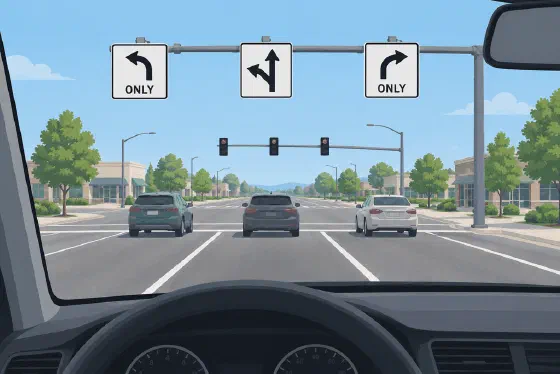
What do the lane-use arrows in the picture tell you about the intersection ahead?
Why it's A: From the middle lane, you can go straight or turn left
Each lane-use arrow shows the moves permitted from its lane. The middle sign pairs a straight-ahead arrow with a left-turn arrow, so either move is legal from that lane, while the signs marked ONLY limit their lanes to one turn.
Diamond-shaped signs are warning signs that alert you to a hazard or unusual condition ahead, such as a curve, a merge or a slippery surface. Interstate routes are marked with a shield, and school crossings with a five-sided sign.
Why it's A: Reduce speed and stop if the situation calls for it.
At a YIELD sign you must reduce speed and let pedestrians and the traffic you are crossing or joining go first. If nobody is coming you can keep moving, but you have to stop whenever others have the right-of-way.
Tip A full stop at a YIELD sign is required only when traffic or pedestrians make it necessary.
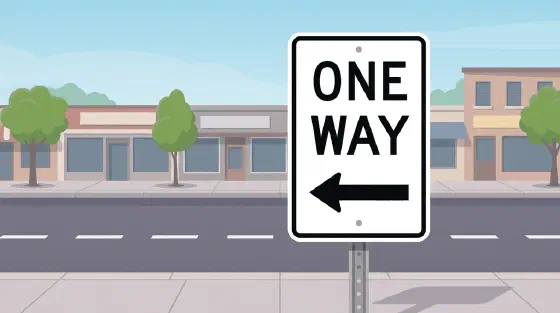
Why it's B: Traffic moves only in the arrow's direction.
A ONE WAY sign shows that every vehicle on that street must travel in the single direction the arrow points. Never drive against the arrow, and when turning onto the street, turn so you head the way it indicates.
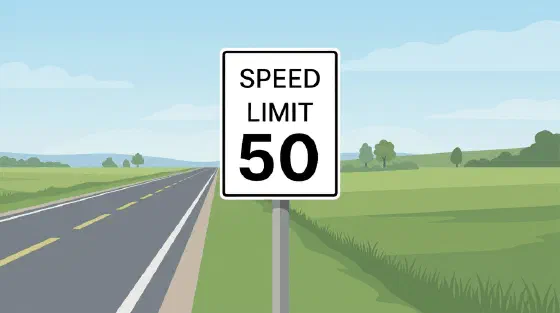
Why it's C: In good weather, you may legally drive no faster than 50 mph.
A SPEED LIMIT sign posts the maximum lawful speed for good conditions, here 50 mph. It is not a required or minimum speed, and you should go slower when rain, fog or heavy traffic make 50 mph unsafe.
Tip The posted number is a ceiling for perfect conditions; in bad weather the safe speed is often lower.
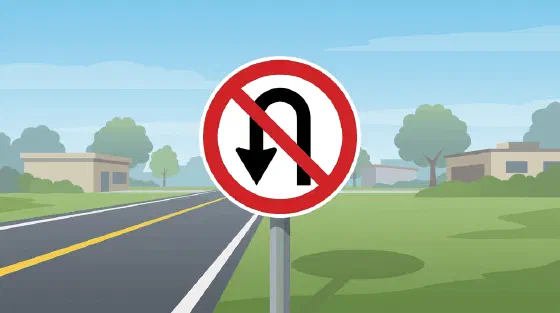
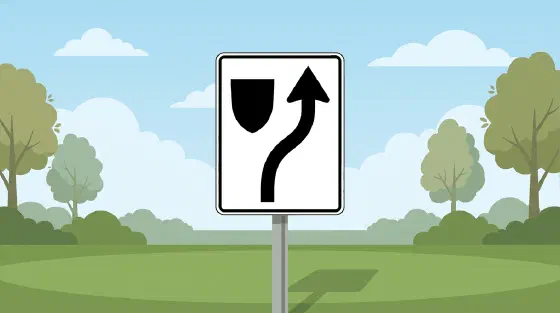
A driver who sees this sign should understand that it means:
Why it's B: Stay to the right of the island or obstacle ahead
The arrow curving past the shape tells traffic to stay on the right side of a median, traffic island or other obstruction. The sign stands just before the object it refers to.
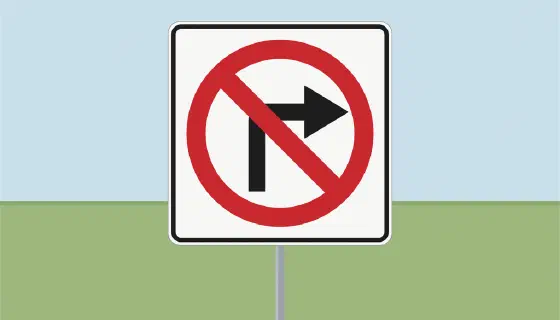
A black arrow turning right, inside a red circle with a diagonal slash, means right turns are forbidden at this spot. Take another route; U-turn and turn-on-red restrictions are shown on their own signs.
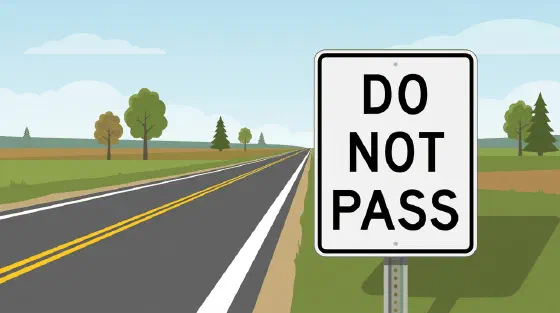
Why it's A: Passing is not allowed here for any reason.
A DO NOT PASS sign marks the start of a zone where overtaking is banned, even when the road looks clear. Keep to your own lane until markings or a sign show that passing is permitted again.
Tip Even a road that looks completely empty ahead does not make passing legal in this zone.
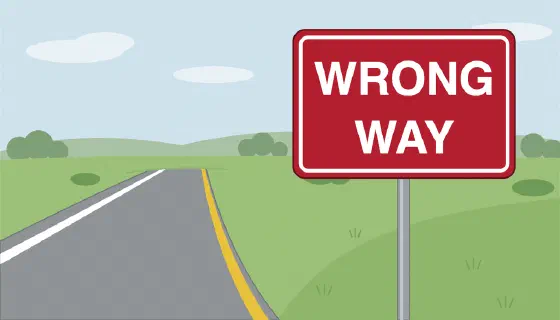
Why it's B: Do not continue ahead; you must turn around
A WRONG WAY sign is posted on one-way streets, freeway ramps and the far side of divided highways to warn drivers heading against traffic. If you see it, you are traveling in the wrong direction and must turn around safely.
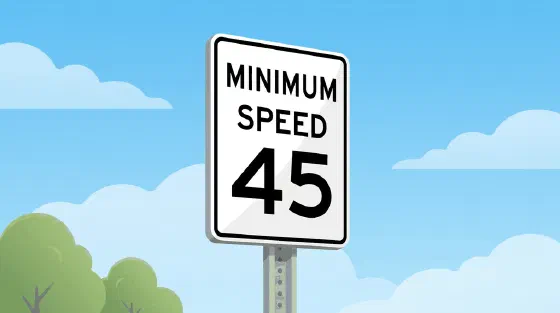
Why it's C: To keep drivers from going so slowly that they create a hazard
A minimum speed sign, such as the MINIMUM SPEED 40 sign shown, sets the lowest speed allowed on that road when conditions are normal. A vehicle crawling far below the pace of traffic makes others brake hard or swerve around it, creating a hazard much like speeding does.
Signs that alert you to hazards ahead, like a curve or a narrow bridge, use which color scheme?
Why it's A: Yellow background with black lettering or symbols
Warning signs are yellow with black words or symbols and alert you to conditions such as curves, narrow bridges, or slippery pavement. White signs usually state rules, and green signs give directions.
Speed limit signs are upright rectangles, the usual shape for regulatory signs that state a law you must follow. A stop sign has eight sides, and a school crossing sign has five.
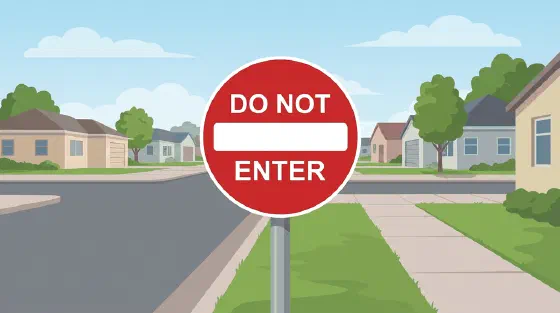
Why it's C: Entry into this restricted road is forbidden
A DO NOT ENTER sign marks a road that traffic is barred from entering, such as the wrong end of a one-way street or a freeway exit ramp. If it faces you, do not drive in.
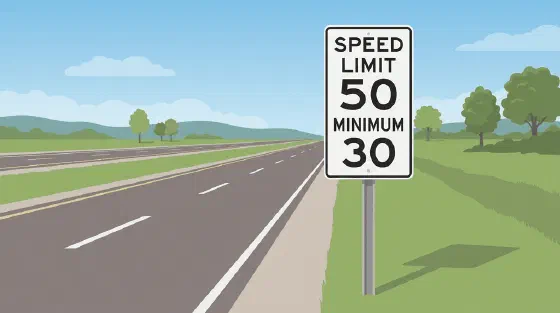
Why it's A: Top speed 50 mph and lowest speed 30 mph when conditions are good
This sign sets a top legal speed of 50 mph and a lowest speed of 30 mph for ordinary, favorable conditions. If weather, traffic, or the road surface make those speeds unsafe, slow down.
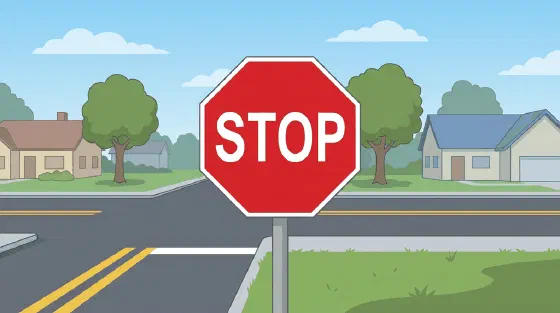
When you come to this sign, what are you required to do?
Why it's B: Stop completely, then go ahead once it is safe.
You must bring the vehicle to a full halt at the marked line, or before the crosswalk or intersection if no line is painted. After that, let pedestrians and crossing vehicles go first and continue once the way is safe.
Tip Make sure the wheels stop turning entirely, since a rolling stop is a common reason for failing the road test.