Scanning, Space and Communication — Permit Practice Test
Turns and signalsKeyboard: A · B · C · Enter
Drivers behind you may be caught off guard because you have to slow down or stop at an unexpected place. What should you do?
Why it's C: Give the brake pedal a few quick taps
A few quick taps on the brake pedal flash your brake lights and alert following traffic that you are about to slow down. That early warning gives those drivers time to react and helps prevent a rear-end crash.
Why it's A: Stay alert and keep scanning all around you.
Defensive drivers stay attentive and move their eyes constantly, watching the roadside and checking the mirrors every few seconds; staring straight ahead or counting on a last-second escape leaves you unprepared.
When you travel at highway speed on dry pavement, what is the minimum safe following distance behind the vehicle ahead?
Why it's B: A gap of 3 or 4 seconds
On dry pavement at highway speed, the minimum safe gap behind the vehicle ahead is 3 to 4 seconds; some states recommend a full 4. Leaving more room is fine, but only 2 seconds leaves too little time to react and stop.
What is the four-second rule meant to help you do?
Why it's C: Keep a safe gap when following another vehicle.
The rule sets your following distance: when the vehicle ahead passes a fixed marker such as a sign, you should reach that marker no sooner than four seconds later. On dry pavement, that gap gives you time to notice a problem and stop.
Which of these habits is an example of driving defensively?
Why it's B: Constantly scanning the road for possible dangers.
Defensive drivers keep their eyes moving, looking well down the road and around the car so hazards are spotted early; fixing your gaze on the car just ahead or following only one car length behind leaves almost no time to react.
Looking far enough down the road helps you avoid abrupt maneuvers at the last second. What is the minimum number of seconds in front of your vehicle that you should be scanning?
Why it's C: 10 to 15 seconds
Looking at least 10 to 15 seconds down the road lets you notice trouble while there is still time to slow down or change lanes smoothly, instead of reacting abruptly at the last moment. Many handbooks advise looking even farther ahead, as much as 20 to 30 seconds.
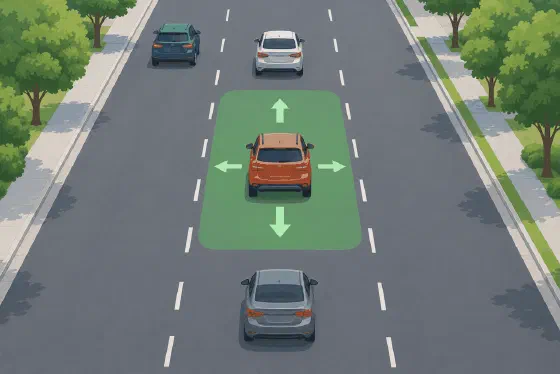
Where around your vehicle should you try to maintain a cushion of space?
Why it's A: All the way around the vehicle.
Trouble can come from any direction, so open space ahead, behind, and to each side gives you time and room to react; avoid driving alongside other cars where they can box you in.
What is one good way to reduce your chances of being in a crash?
Why it's B: Let other drivers know what you plan to do
Turn signals, brake lights, headlights, and the horn all let other road users know what you intend to do. When they understand your plans early, they have time to respond, which helps everyone avoid collisions.
In which situation should you leave a larger gap than usual between your car and the one ahead?
Why it's C: When you are stopped on an uphill slope.
When traffic starts moving again on an upgrade, the car in front may roll back a little before it pulls forward, and the extra space keeps it from bumping into you.
What determines how big a gap you need to cross traffic safely?
Why it's A: Road conditions, weather, and approaching traffic
You need a bigger gap when the pavement is wet or slippery, when visibility is poor, and when approaching vehicles are moving fast. A stop sign or your turn signal does not change how much time and room it takes to get across safely.
Another vehicle appears to be about to hit yours. What should you do?
Why it's B: Honk your horn to warn the driver
A quick blast of the horn is the fastest way to grab the other driver's attention so they can brake or steer clear. Waving or switching on your flashers is easy to miss in the few seconds you have.
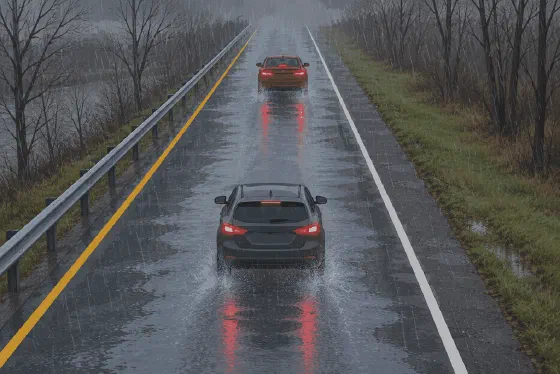
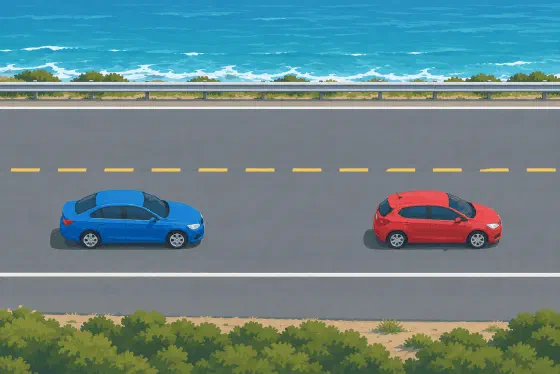
You are driving on a rain-soaked road like the one pictured. What should you do?
Why it's C: Allow 5 or 6 seconds of following distance
Wet pavement gives your tires less grip, so stopping takes longer and needs more distance than on a dry road. A cushion of 5 or 6 seconds behind the vehicle ahead gives you room to brake smoothly and avoid a skid if it stops suddenly.
Choosing a good position within your lane should help you:
Why it's A: Discourage other drivers from trying to share your lane.
A smart lane position helps you see and be seen, stay out of other drivers' blind spots, avoid wind blast, keep an escape route open, and discourage others from squeezing into your lane.
In normal driving conditions, how far back should you stay from the vehicle you are following?
Why it's B: A gap of three seconds.
In normal conditions, stay at least three seconds behind the vehicle ahead: when it passes a fixed object, you should be able to count three seconds before you reach the same spot. Leave even more room when the weather is bad or it is hard to see.
What is the best way to be ready for whatever may appear on the road in front of you?
Why it's C: Keep scanning the whole road and both sides of it
Constantly moving your eyes across the road and its edges lets you spot trouble early, giving you time to respond calmly to people, other vehicles or a change in conditions. Staring at one spot shrinks what you notice.
What message do your brake lights send to the drivers behind you?
Why it's A: That you are reducing speed or stopping
Brake lights turn on whenever you press the brake pedal, warning traffic behind you that you are losing speed or about to stop. Check them regularly, because a burned-out bulb leaves following drivers without that warning.
Which habit makes it less likely that you will have to slam on the brakes in traffic?
Why it's B: Scanning well ahead and keeping a safe following distance
Looking far down the road lets you spot trouble early, and a safe gap behind the car ahead gives you room to slow down gradually. Together, these habits make sudden hard braking much less likely.
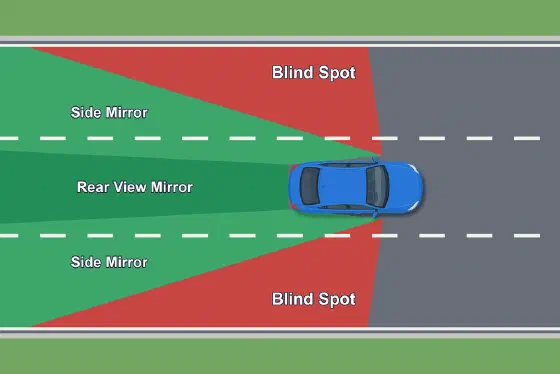
Why it's C: The zone you can check only by turning your head.
As the red zones in the picture show, a car's mirrors leave areas to each side and toward the rear uncovered; these blind spots can be checked only by turning your head to look.
Whenever you reach an intersection, a crosswalk, or a railroad crossing, what should you always do?
Why it's A: Look to both sides of your vehicle for anything approaching
Scanning left and right lets you spot cross traffic, pedestrians, and trains before you enter these areas. A full stop is not always required, and passing a vehicle that has stopped is dangerous because it may be waiting for a pedestrian you cannot see.
Tip Even on a green light, check left, then right, then left once more before you roll into an intersection.