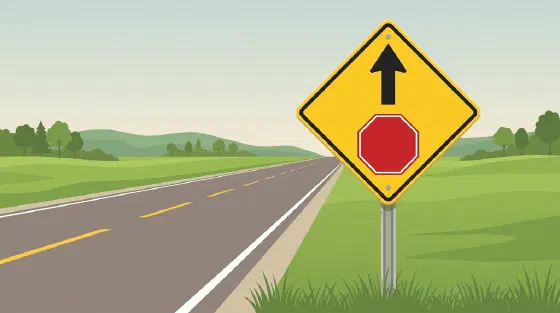
What does this yellow diamond-shaped sign warn you about?
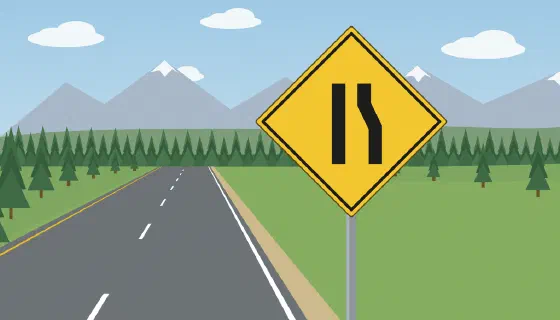
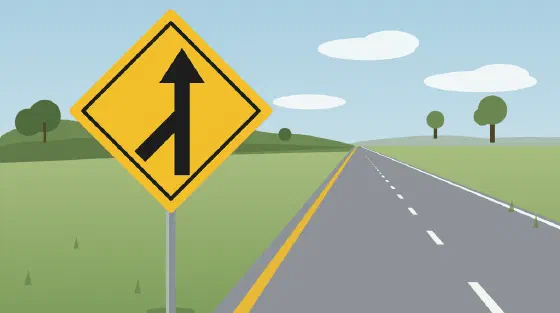
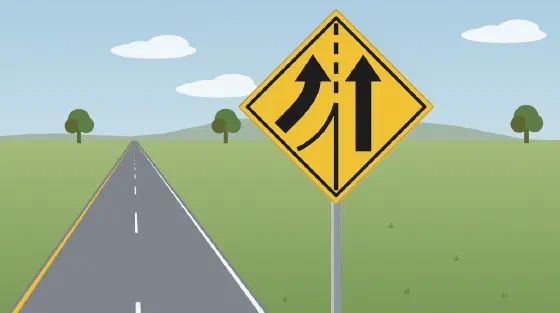
In the symbol, the right-hand line bends in toward the other lane, which shows that the right lane runs out ahead. Drivers in that lane must merge to the left when there is a safe gap.
In the symbol, the right-hand line bends in toward the other lane, which shows that the right lane runs out ahead. Drivers in that lane must merge to the left when there is a safe gap.
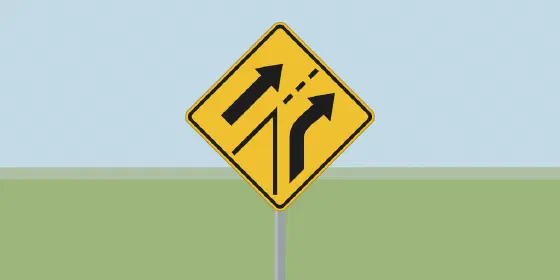
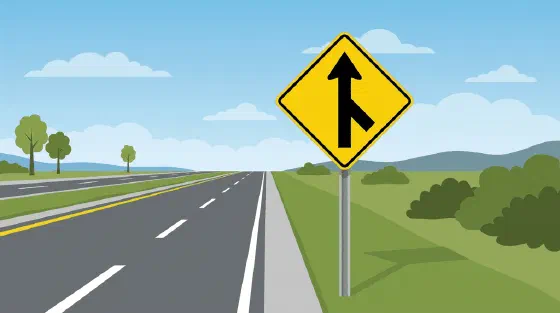
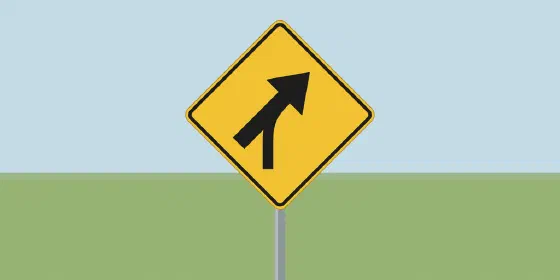
This sign is used where a roadway joining from the right comes to an end and its traffic has to merge into the through lanes; on the entering road, adjust your speed and find a safe gap, and on the main road, be ready to make room. The side-road sign shows a short line meeting the main road at an intersection, while the merge sign shows the entering lane flowing into the through road.

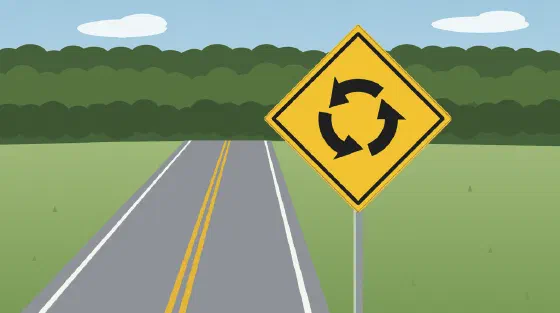
The ring of arrows stands for a roundabout ahead. Drivers entering it must yield to vehicles that are already traveling around the circle.

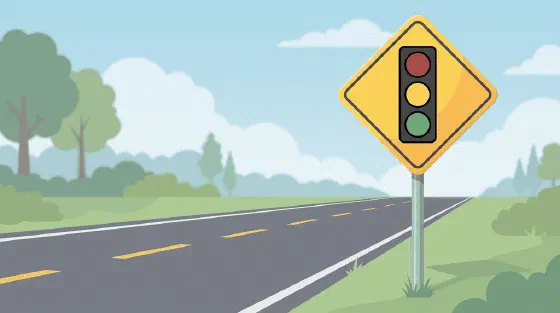
A warning sign picturing the red, yellow, and green lights of a signal tells you that an intersection controlled by a traffic light is ahead, often one that is hard to see. Slow down and be ready to stop in case the light is red when you arrive.

The short line meeting the main arrow from the lower left shows a second roadway feeding in from the left. Watch for vehicles moving into your lane and adjust your speed or position so they can merge smoothly.

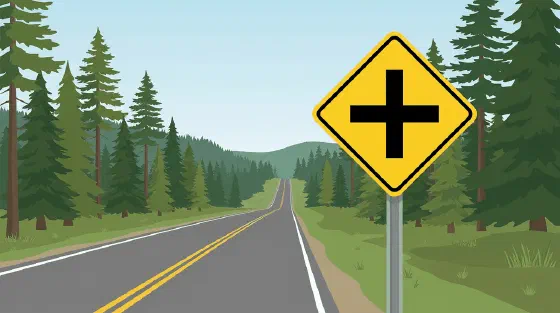
A black cross on a yellow diamond warns that another road crosses yours ahead. Ease off the gas, look both ways and be prepared to let cross traffic go first when the rules require it.
Tip A yellow diamond always signals a warning, while hospitals and other medical services appear on blue rectangular service signs.

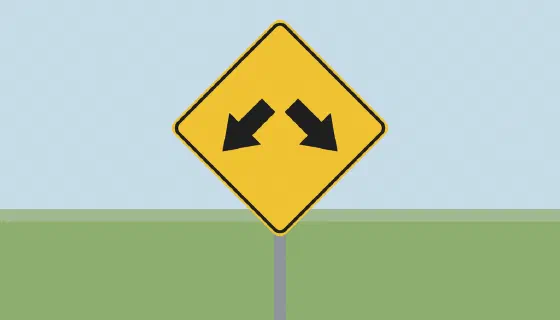
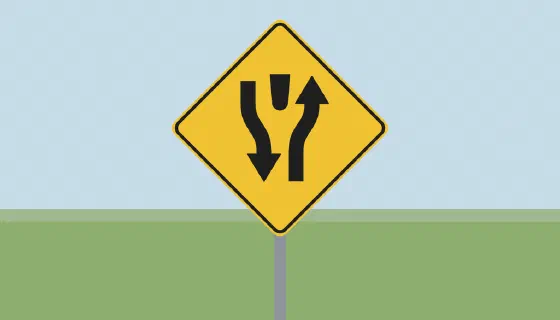
The two arrows pointing down and outward mark an island, obstruction or divider in the road. You may drive around it on either side, and the two streams of traffic may come back together or go separate ways.

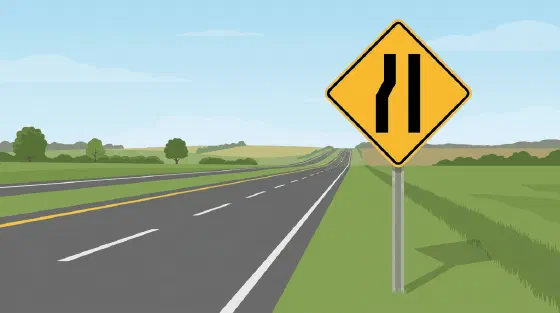
The left line of the symbol jogs inward, showing that the left lane is about to drop off. If you are in that lane, move over to the right lane once it is safe.

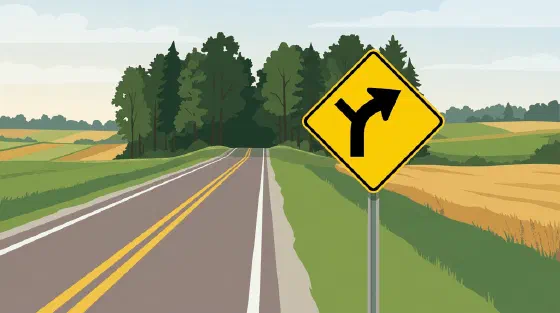
This sign joins a curve arrow with a side road, warning that another road meets yours partway through the bend. Because the curve limits how far ahead you can see, slow down and keep an eye out for vehicles pulling in or out of the side road.

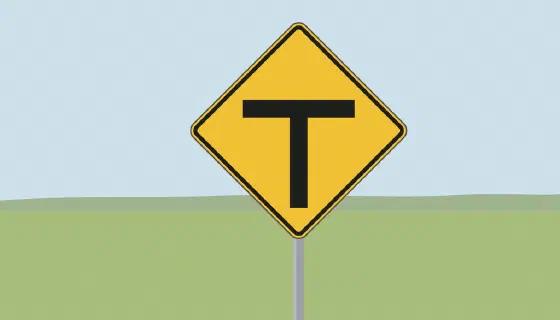
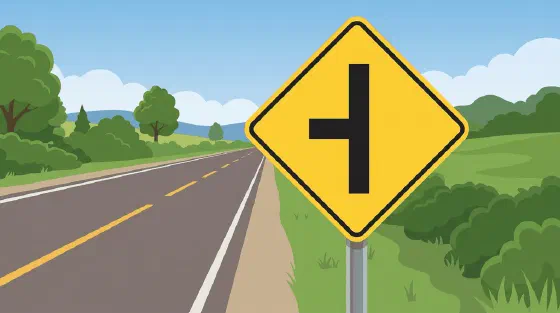
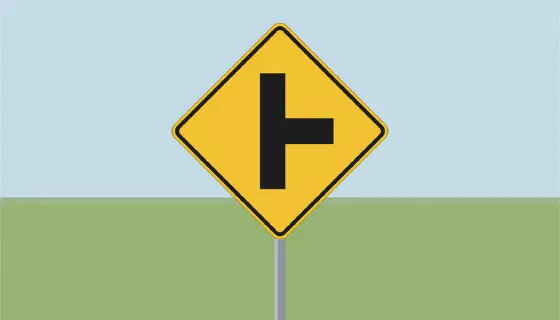
The T shape means your road stops at a crossing road ahead. Slow down, give the right-of-way to cross traffic as required, and get ready to go left or right.
Tip Before turning, check carefully for vehicles moving along the through road.

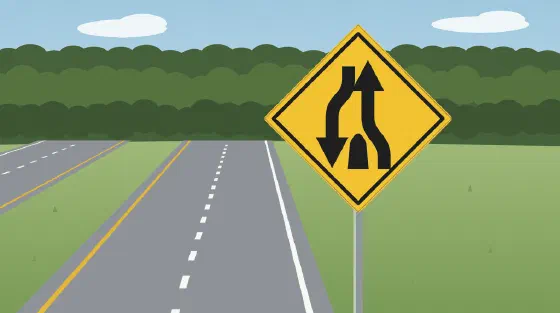
This sign is posted before the point where the median or other physical divider stops, so traffic moving in opposite directions will no longer be separated. Expect two-way traffic and keep to the right.

The two arrows separated by a broken line show that traffic coming in from the left gets a lane of its own and does not need to merge. Expect more vehicles on your left and check that side before changing lanes.

Two arrows divided by a dashed lane line show that the road joining from the right continues in a lane of its own, so its traffic does not have to merge. Still watch for vehicles in the new lane, because some of them may change lanes later.

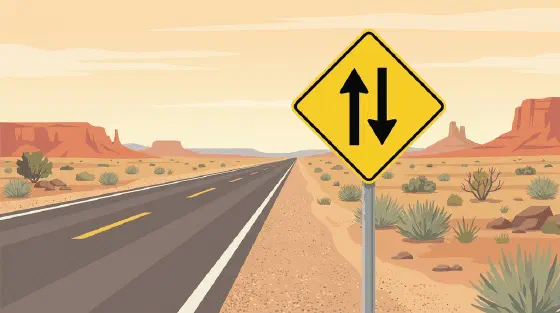
Arrows pointing in opposite directions warn that you are leaving a one-way street or divided highway and will share the road with oncoming traffic. Keep to your own lane and watch for approaching vehicles.
Tip One arrow up and one arrow down is your cue that oncoming cars share this road, so stay out of their lane.

The branch leaving the main line on a diagonal shows a side road meeting yours at an angle from the right. Angled junctions make approaching vehicles harder to see, so reduce speed and watch for traffic turning in or out.

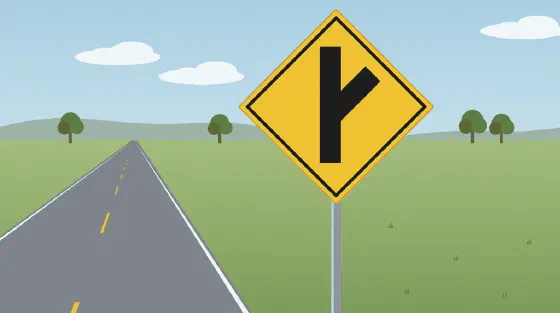
This symbol warns that another road enters from the side a short way ahead, on the side the short bar points to. No stop or turn is required, but be ready for cars entering your road and for drivers ahead who slow down to turn off it.

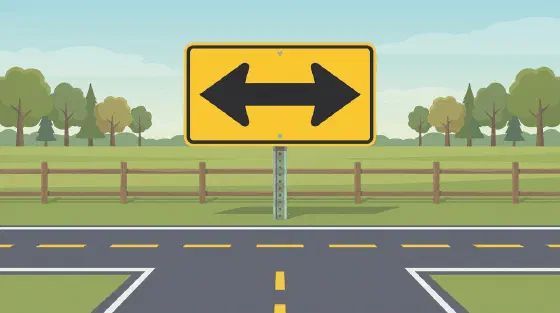
This horizontal arrow pointing both ways is posted where the road you are on ends, usually at a T-intersection, to warn that you cannot keep going straight. Slow down and get ready to turn left or right.

The island shape between the arrows shows that a median or barrier will soon separate the two directions of traffic. Stay to the right of the median.

The line joining the main arrow from the right shows that traffic from another road or ramp will flow into your lane. Be ready to adjust your speed or move over so the entering vehicles can merge safely.
Tip A branch that flows into the main arrow and travels on with it is what sets a merge sign apart from an intersection sign.

The short bar sticking out to the right stands for a side road that joins your road from that side. Vehicles may pull out of it, so ease off the gas and keep watching the right as you go by.

This symbol-only Stop Ahead sign is placed where the stop sign itself cannot be seen in time, such as after a curve or over a hill. Begin slowing early so you can make a smooth, complete stop at the sign.
Every question in this set has its own page with the correct answer and an explanation.