On a slippery road, your car goes into a skid. How should you respond?
Why it's B: Point the front wheels the way you want to travel
To recover from a skid, ease off the gas and steer smoothly so the front wheels head where you want the car to go, keeping your eyes on that path. Locking the brakes or jerking the wheel toward the roadside only reduces grip further and can deepen the skid.
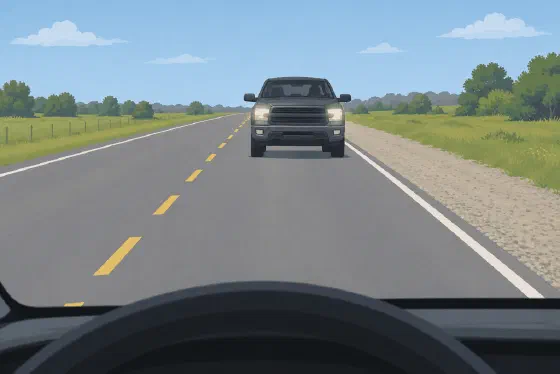
A vehicle coming toward you moves across the center line and is headed straight for you. What is the best response?
Why it's C: Honk, brake hard, and steer toward the right edge of the road
Warn the other driver with your horn, cut your speed as much as you can, and move right, even onto the shoulder, to get out of the vehicle's path. Swerving left is risky because the other driver may jerk back into their own lane, right where you would be.
Seat belts do the most to prevent injuries when they are used by:
Why it's D: The driver and all passengers, every time they ride.
Belts protect only the people who have them on, and a crash can happen on any trip, short or long, on any kind of road. An unbelted occupant can also be thrown around inside the car and injure the others.
You have just been in a traffic collision. What are you required to do?
Why it's A: Stop, aid anyone who is hurt, notify the police, swap information, and contact your insurer.
After any crash, a driver has to stop at the scene, give reasonable help to anyone hurt, notify the police, trade names, license, and insurance details with the others involved, and let their own insurance company know. Leaving the scene is against the law, and moving an injured person who is not in immediate danger can make their injuries worse.
A tire suddenly blows out while you are driving. How should you handle it?
Why it's B: Let the vehicle gradually slow down and stop
Hold the wheel tightly to keep the car going straight, lift your foot off the accelerator, and let the car lose speed gradually instead of braking hard. Once you are moving slowly, pull off the road and stop where it is safe.
What is the safest way to carry an animal in the cargo bed of a pickup truck?
Why it's C: Tie it securely or use a crate fastened to the truck
An animal that is tied from both sides or kept in a crate fastened to the truck cannot fall, jump or be thrown out during a sudden stop or turn. Bed walls of 18 inches and a closed tailgate do little to keep an animal from leaping over the side.
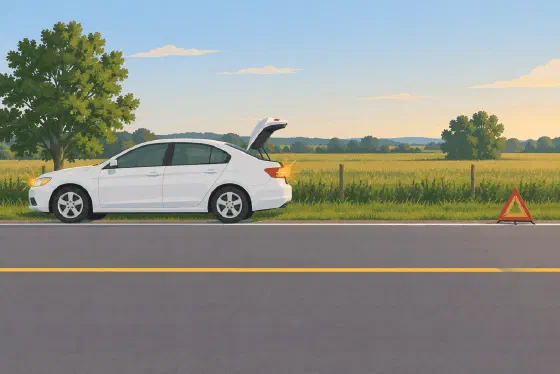
Your vehicle stops working while you are traveling on a highway. What should you do?
Why it's A: Turn on your hazard flashers to alert other drivers
Hazard flashers tell approaching drivers that your vehicle is stopped or disabled, giving them time to slow down or move over. If you can, get the vehicle well off the roadway.
Your vehicle drifts so that one or more wheels leave the paved surface. What is the safest response?
Why it's B: Hold the wheel firmly and keep the vehicle going straight
Braking hard or yanking the wheel while tires are off the pavement can make you lose control when they catch the edge. Hold the wheel firmly, ease off the accelerator, keep going straight until you have slowed, and then return to the pavement gently when it is safe.
Skids nearly always start with something the driver does, such as entering a curve too fast, braking or steering too hard, or speeding up too quickly for the conditions. Wet or icy pavement makes a skid more likely, but slowing down to suit the conditions is what prevents one.
Why it's A: Every time you ride, as long as the vehicle has seat belts.
The driver and every passenger should buckle up whenever the vehicle has seat belts, and airbags are not a substitute for them. If the lap and shoulder belts are separate, wear both.
While you are driving, the back end of your vehicle begins sliding toward the left. How should you respond?
Why it's B: Turn the steering wheel to the left
Turn the wheel the same way the back of the car is sliding, here to the left, and take your foot off the gas. Braking hard can lock the wheels and make the skid worse.
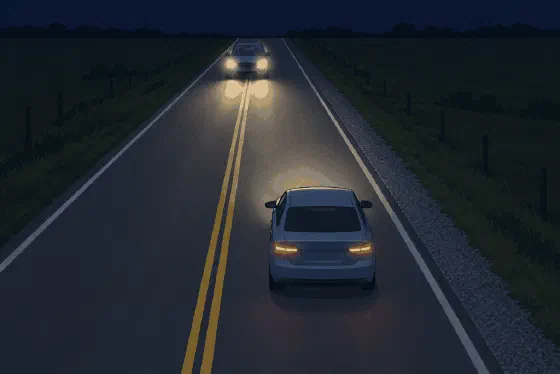
A vehicle coming from the opposite direction is driving straight at you in your lane. What should you do?
Why it's C: Brake, sound your horn, and steer to the right
Slowing down reduces the force of any impact, the horn alerts the other driver, and moving right takes you out of their path. Never swerve left, because the other driver may jerk back into their own lane at the last moment.
Tip If the pavement offers no escape, driving onto the right shoulder or even into a ditch is far less dangerous than crashing head-on.
You need to make an emergency stop in a car with anti-lock brakes (ABS). How should you work the brake pedal?
Why it's A: Push it down firmly and keep steady pressure on it
Anti-lock brakes stop the wheels from locking by releasing and reapplying the brakes many times a second on their own, so the driver only needs to press hard and hold. A pulsing pedal and some noise are normal; easing off or pumping just makes the stop longer.
When you perform CPR, how many chest compressions should you give per minute?
Why it's B: 100 to 120
Current guidelines say to press down firmly and quickly in the middle of the chest at a pace of 100 to 120 compressions a minute, roughly two per second, letting the chest spring back completely after each one.
Which rule holds true for every kind of driving emergency?
Why it's C: Pause and think it through before reacting
Whatever the emergency, from a blowout to a brake failure or an object suddenly in your path, panic tends to trigger reflex moves such as stomping on the brake or yanking the wheel, which can make matters worse. A brief pause to collect yourself and judge what is happening helps you pick the safest response.
What single step does the most to protect you from injury or death in a traffic collision?
Why it's A: Buckling your seat belt
A buckled seat belt keeps you in place so you are not thrown around inside the vehicle or out of it, which makes it the most effective protection you have in a crash.
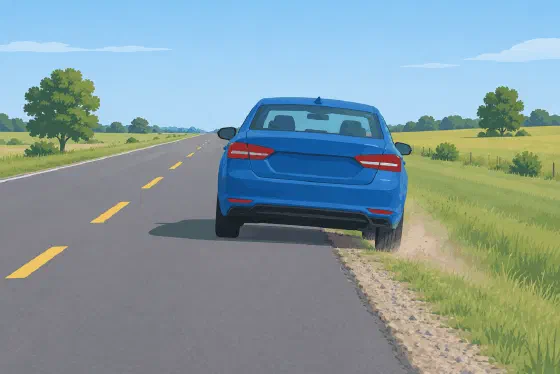
Your car's right tires have slipped off the pavement onto a soft shoulder. How can you return to the roadway most safely?
Why it's B: Ease off the accelerator and brake lightly.
Sudden steering or hard braking on a soft shoulder can cause a skid or send the car lurching across the lane. Take your foot off the gas, brake gently while holding the wheel firmly, and steer back onto the pavement once you have slowed and the road is clear.