
When you see this sign, what lies ahead?
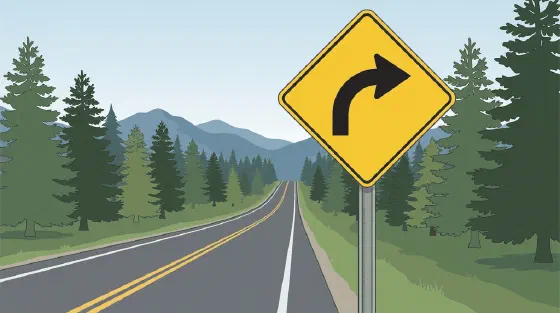
Why it's C: A curve that bends to the right.
A single arrow sweeping to the right warns that the road curves right ahead. Ease off your speed before the curve and watch the road closely.
A single arrow sweeping to the right warns that the road curves right ahead. Ease off your speed before the curve and watch the road closely.
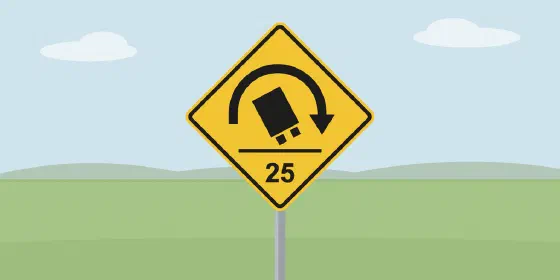
The tipping truck beside a curved arrow warns that the bend ahead is sharp enough to roll over tall or heavy vehicles, and the 25 is the speed recommended for taking it safely. That number is an advisory top speed for the curve, never a minimum.
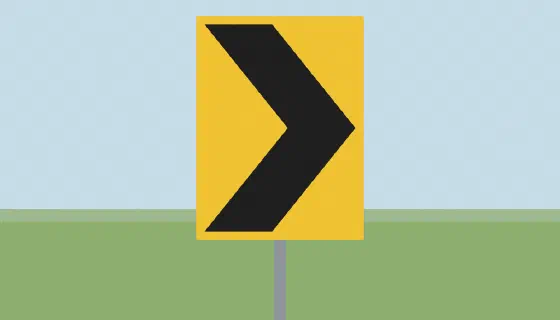
A chevron alignment sign is placed on the outside of a sharp curve, and its point shows which way the road bends, in this case to the right. Reduce your speed before the curve and follow the direction of the chevron.
Tip As you go through the bend, aim your eyes far ahead in the direction the chevron points so you stay centered in your lane.
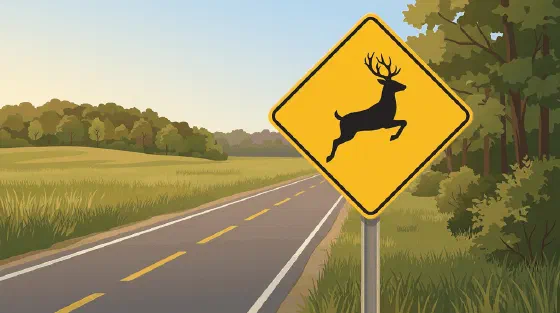
This deer symbol warns that deer often cross the road in this area. Reduce your speed, watch the roadsides and be ready to brake hard, especially around dawn and dusk.
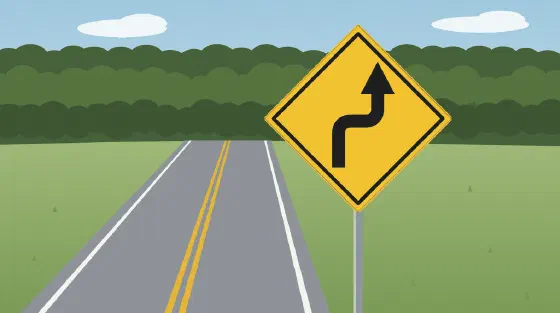
The bent arrow shows two tight turns in a row: first to the right, then back to the left. Lower your speed before the first turn and stay alert.
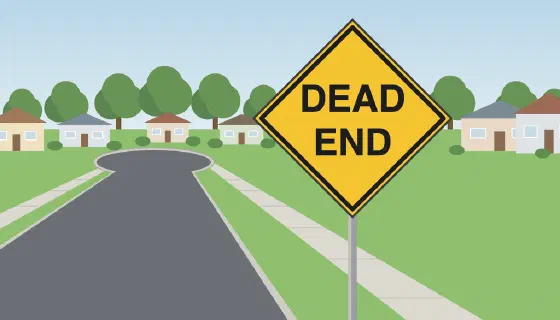
A DEAD END sign means the street stops ahead without connecting to another road, so you will have to turn around to get out. It does not forbid entry; it only warns that there is no through route.
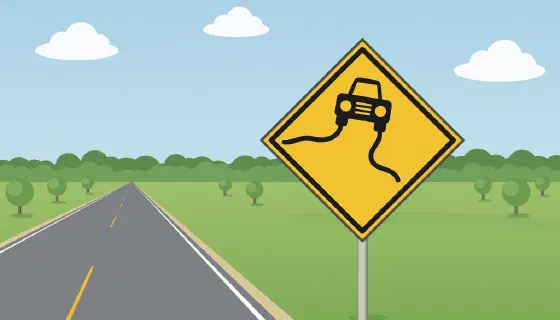
The car with wavy skid marks warns that the surface turns slippery when wet. In rain or ice, slow down, increase your following distance and avoid sudden steering or braking.
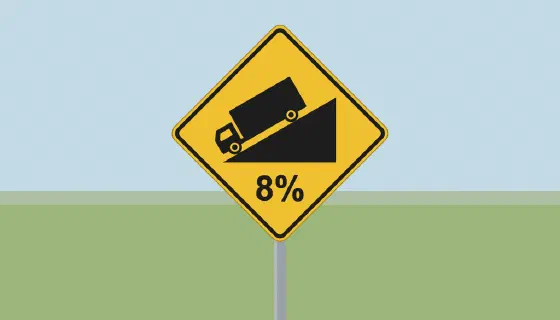
A truck pictured on a slope with the figure 8% warns of a steep downhill stretch where the roadway falls roughly 8 feet over every 100 feet. Before starting down, shift into a lower gear so the engine helps hold your speed in check.
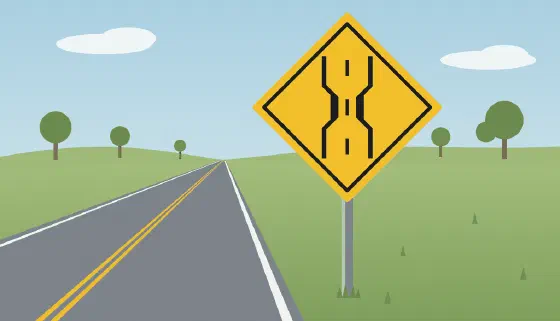
The two lines that pinch inward stand for a bridge or culvert ahead that is narrower than the road leading to it, often with little or no shoulder. Slow down and check for oncoming traffic before you cross.
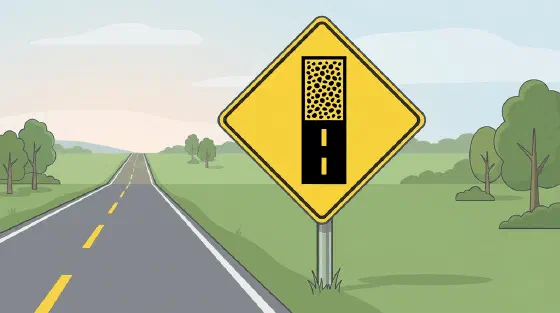
This symbol shows a paved road turning into a rough, unpaved surface such as gravel or dirt. Slow down before you reach the change, since your traction and handling will be different there.
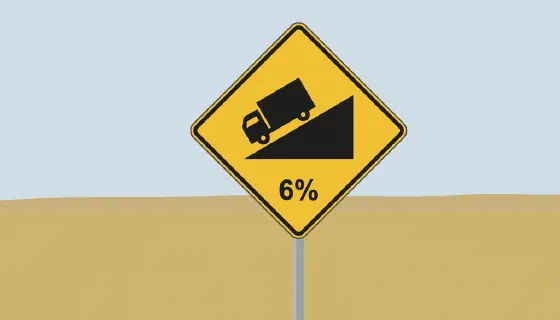
This sign, a truck on a slope with a percentage, warns of a steep downgrade ahead, and the number shows how steep it is. Slow down and be ready to control your speed on the descent, especially in a large vehicle.
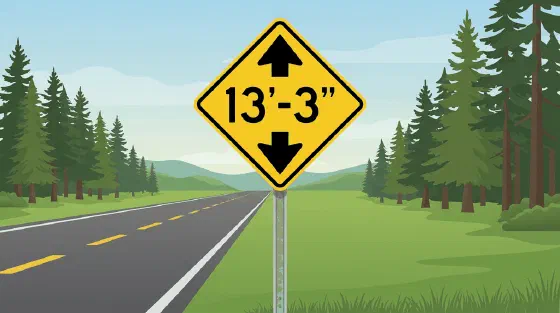
The arrows pointing up and down around the 12-foot 6-inch figure show how much vertical space there is under a bridge, overpass, or other structure ahead. If your vehicle or its load is taller than that, do not go under it; find another route.
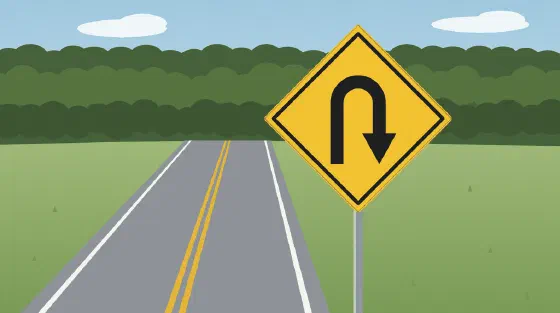
A hairpin curve sign is used where the road changes direction by 135 degrees or more, nearly doubling back on itself. Here the arrow loops to the right, so slow down well before the curve.
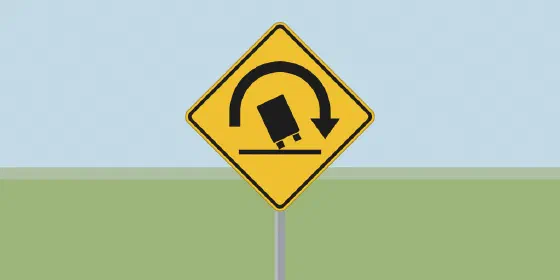
A truck leaning over beside a curved arrow means the bend ahead is tight enough that tall, top-heavy vehicles can tip over in it. Drivers of trucks and other high-profile vehicles in particular need to cut their speed before entering the curve.
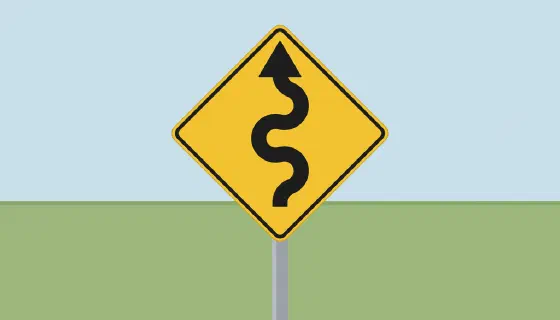
The wavy arrow stands for a winding road, a series of curves one after another. Read from the bottom, its first bend goes to the right, and the curves keep switching direction after that.
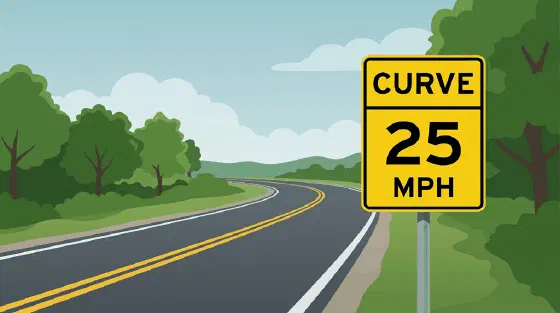
The sign gives an advisory speed for the curve: 25 mph is the fastest speed recommended when the road is dry, visibility is good, and traffic is light. In rain, snow, ice, or darkness you should take the curve even more slowly, and the sign never sets a minimum speed.
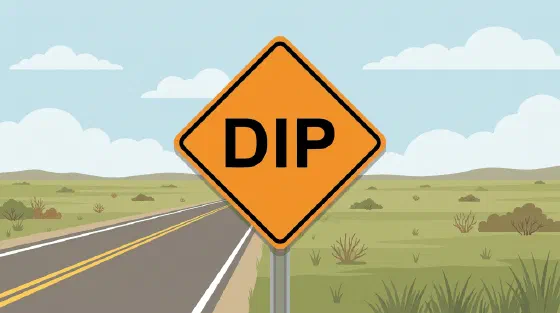
A DIP sign warns that the road suddenly drops into a low spot. Slow down before you reach it, and be especially careful in wet or icy weather, when water or ice can collect at the bottom.
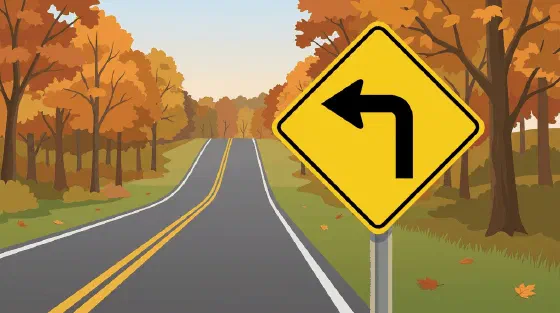
The arrow goes straight up and then bends at a right angle to the left, marking a sharp turn that should be driven at low speed. Slow down well before the bend and stay alert.
Every question in this set has its own page with the correct answer and an explanation.