DMV Written Test home
Connecticut · State Practice SetQuestion 1 of 35 · untimed
Save & exit

Connecticut DMV State Practice Set — 35 Questions with Answers

Following distanceKeyboard: A · B · C · Enter

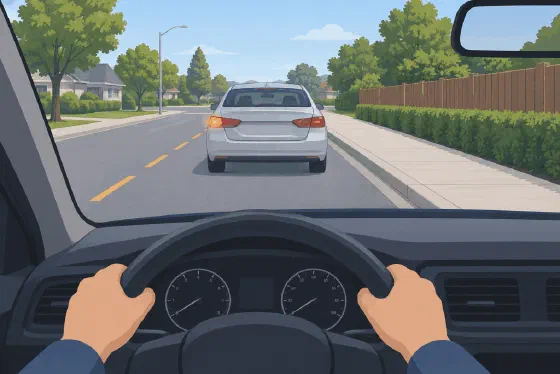
Heavy rain has left the pavement wet. What should you do?
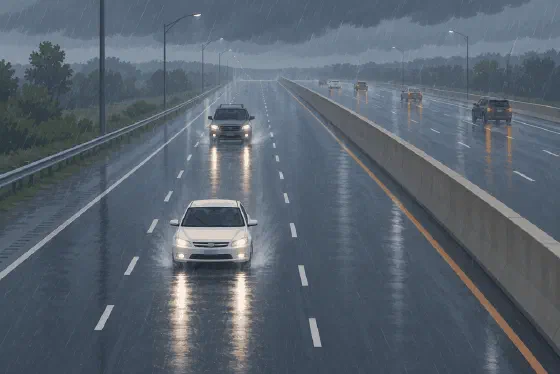
Heavy rain has left the pavement wet. What should you do?
Found a mistake? Report this question or use the form

All questions in this set with answers

Every question in this set has its own page with the correct answer and an explanation.

  1. Heavy rain has left the pavement wet. What should you do?
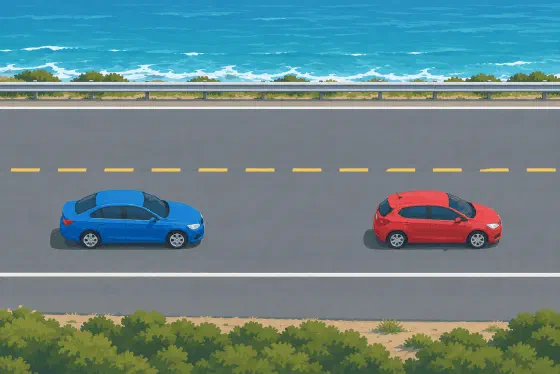
  2. When are you allowed to leave the pavement and use the edge of the road to get around another vehicle?
  3. Which signal, given with the hand and arm, lets other drivers know you intend to make a right turn?
  4. Which of these habits are important when you drive on a major highway?
  5. In which of these situations should you reduce your speed? (State Practice Set)
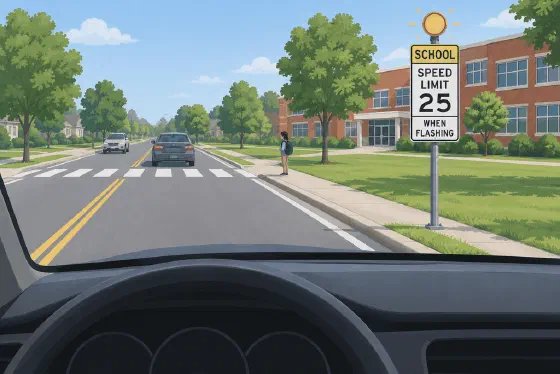
  6. Which of these actions is forbidden while you drive through a school zone like this one?
  7. At what blood alcohol concentration (BAC) does it become illegal to drive?
  8. Which of these could cause the DMV to cancel your road test before it even begins?
  9. Which drink contains as much alcohol as a 5-ounce glass of wine?
  10. When may you leave the road and cross private or public land to get around a sign or traffic light?
  11. At which of these times must your headlights be on?
  12. Which statement describes the Implied Consent Law? (State Practice Set)
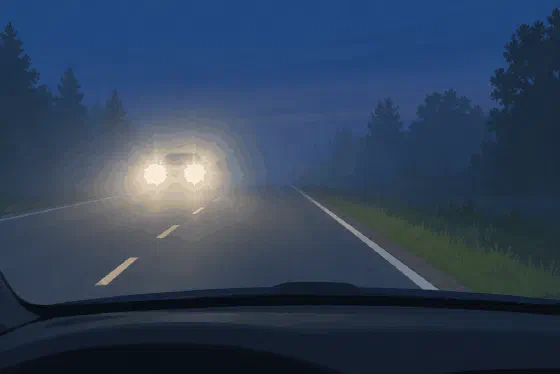
  13. When it comes to a safe speed for your vehicle, which statement is true?
  14. Which guideline gives the minimum space you should keep behind the vehicle in front of you?
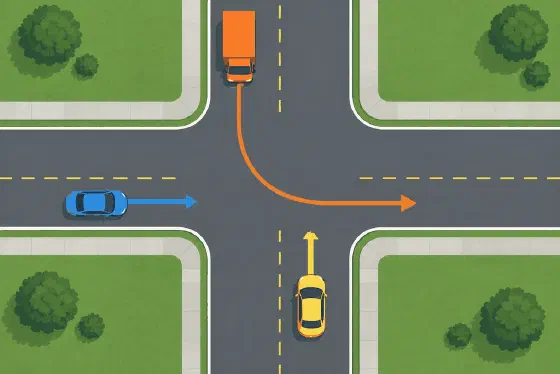
  15. The three vehicles shown reach this intersection at the same time. In what order should they proceed?
  16. If you might not be able to avoid a collision, what should you aim for?
  17. During which hours is a Connecticut driver under 18 who holds a driver's license, not a learner's permit, prohibited from driving?
  18. In which situation should you tap the brakes so your brake lights blink, or use your hazard flashers?
  19. Before which three actions is a look at the traffic behind you especially important?
  20. When are you required to yield to an emergency vehicle? (Road Rules) · Question 406
  21. Which of these behaviors can be a clue that someone is driving drunk?
  22. Which of these has no effect on how far your vehicle travels before it stops?
  23. In the evening, at what point does the law require your headlights to be on? (State Practice Set)
  24. Under Connecticut law, when may you drive past a frozen dessert (ice cream) truck without stopping?
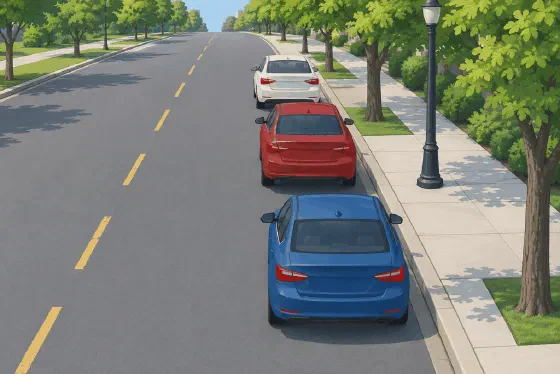
  25. When you parallel park along the curb on a flat street, what should you do?
  26. One of your tires suddenly blows out while you are driving. What should you do?
  27. In Connecticut, which of these may be ordered as a penalty for drunk driving (DUI)?
  28. When you leave your car parked on a slope, how should the front wheels be set?
  29. What should you do if your windshield wipers suddenly quit while it is raining or snowing?
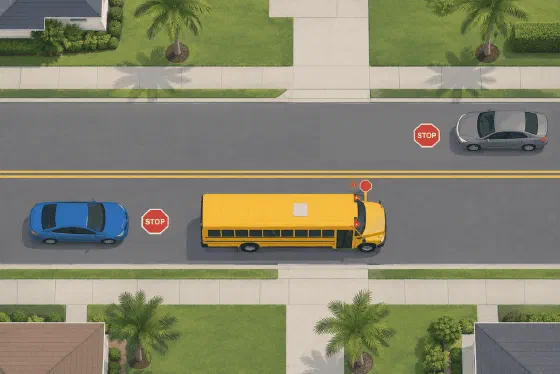
  30. On a two-lane road, a school bus coming from the opposite direction stops and turns on its flashing red lights. What must you do?
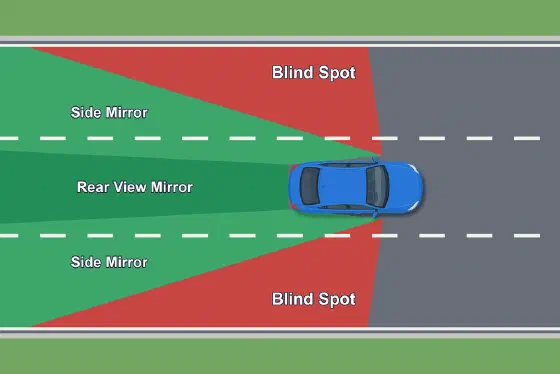
  31. Based on the blind spots shown in the diagram, what should you do before moving into another lane?
  32. Headlights are required during the hours of darkness. In the morning, when does that requirement end?
  33. In which of these situations does the law require you to bring your vehicle to a stop? (State Practice Set)
  34. You are following a school bus when it stops and flashes its red lights. What must you do?
  35. Slippery when wet: Which habit helps keep your vehicle from skidding when the road is slippery?

More Connecticut permit practice