What does this yellow warning sign tell you?
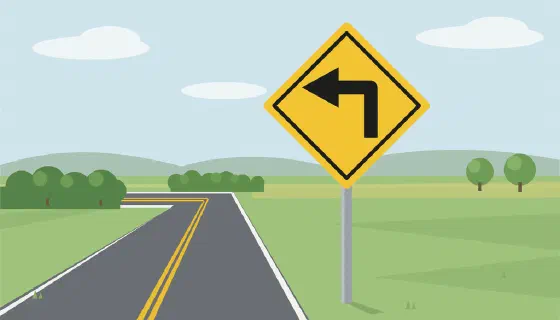
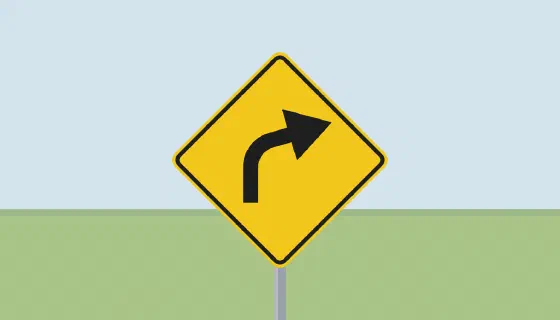
An arrow bent at a right angle warns that the road ahead turns sharply, in this case to the left. Slow down before you reach the turn and keep your vehicle in its lane as you steer through.
An arrow bent at a right angle warns that the road ahead turns sharply, in this case to the left. Slow down before you reach the turn and keep your vehicle in its lane as you steer through.
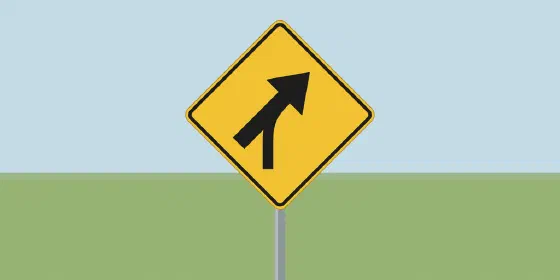
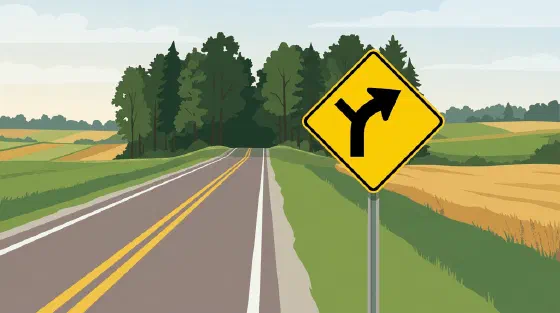
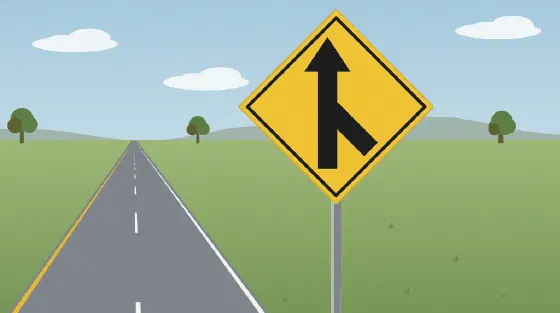
A line joining the main arrow from the lower right shows vehicles from another road or ramp blending into your road. Be ready to slow slightly or shift lanes, when it is safe, so the merging vehicles can fit in.

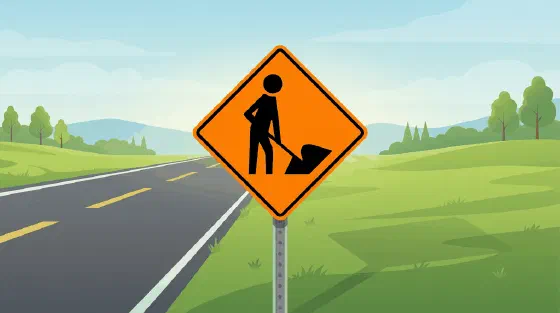
This orange diamond with a figure holding a shovel warns that road workers are present on or near the travel lanes. Slow down, watch for people and equipment, and give the crew as much room as you safely can.

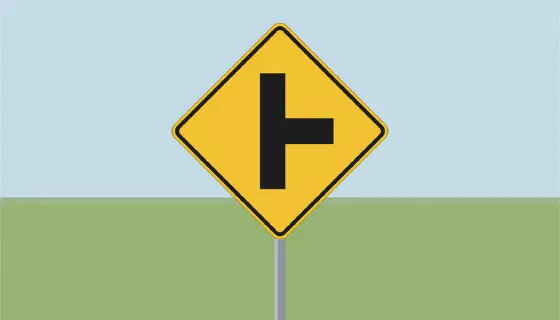
The short bar sticking out to the right stands for a side road that joins your road from that side. Vehicles may pull out of it, so ease off the gas and keep watching the right as you go by.

A smoothly bending arrow marks a curve, here one that bends to the right; an arrow with a right-angle corner would warn of a sharper turn instead. Ease off the gas before the curve and avoid braking hard while you are in it.

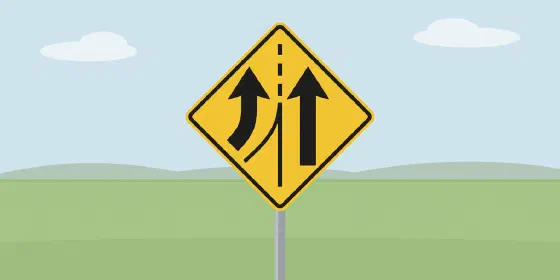
This sign is used where a roadway joining from the right comes to an end and its traffic has to merge into the through lanes; on the entering road, adjust your speed and find a safe gap, and on the main road, be ready to make room. The side-road sign shows a short line meeting the main road at an intersection, while the merge sign shows the entering lane flowing into the through road.

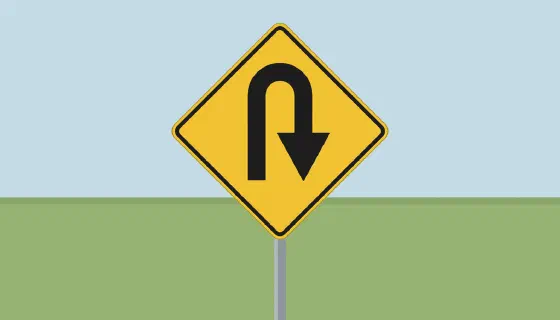
An arrow that doubles back on itself shows a hairpin curve, where the road reverses direction in a tight U shape. Cut your speed well before it and stay in your lane all the way around; this is a warning, not permission to make a U-turn.

This reverse turn sign shows the road turning sharply right and then sharply back to the left. Reduce speed before the first turn and hold your lane position through both bends.

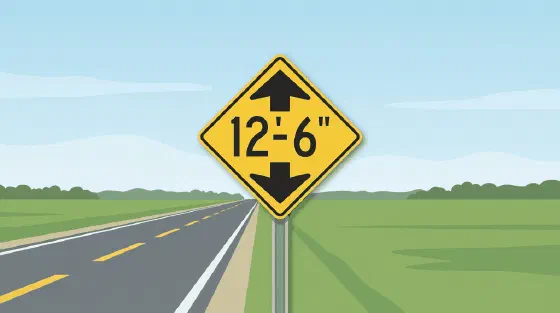
The arrows above and below the posted height show the lowest clearance under a bridge, overpass or similar structure ahead. If you drive a tall vehicle like a truck, bus or RV, compare that figure with your vehicle's height before going on.

This sign joins a curve arrow with a side road, warning that another road meets yours partway through the bend. Because the curve limits how far ahead you can see, slow down and keep an eye out for vehicles pulling in or out of the side road.

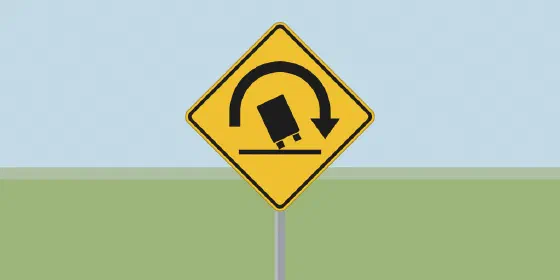
A truck leaning over beside a curved arrow means the bend ahead is tight enough that tall, top-heavy vehicles can tip over in it. Drivers of trucks and other high-profile vehicles in particular need to cut their speed before entering the curve.

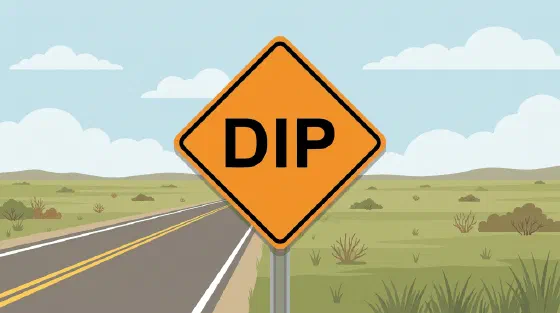
A DIP sign warns of a sudden low point in the road. Slow down before reaching it, since a dip can hide oncoming traffic and can collect water or ice that makes it slippery.

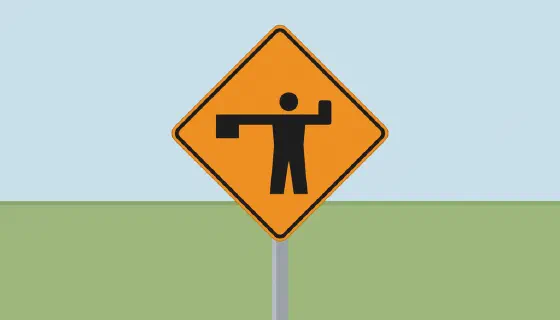
An orange diamond showing a person holding a flag warns that a flagger is working ahead to direct traffic through the work zone. Slow down, be prepared to come to a stop, and obey the flagger's directions.

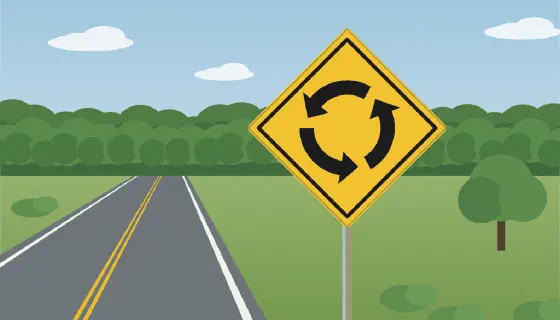
Arrows chasing one another in a circle mean a roundabout is coming up. Slow down, give the right-of-way to traffic already in the circle, travel counterclockwise, and signal before you exit.

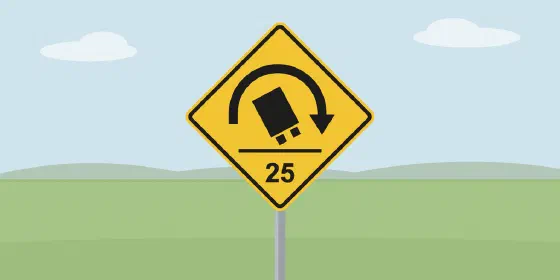
The tipping truck beside a curved arrow warns that the bend ahead is sharp enough to roll over tall or heavy vehicles, and the 25 is the speed recommended for taking it safely. That number is an advisory top speed for the curve, never a minimum.

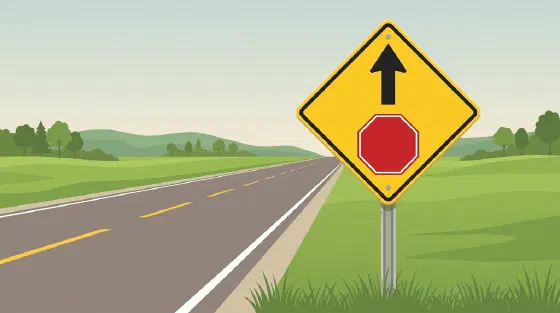
This yellow sign with an arrow and a red octagon gives advance notice of a stop sign that may be hard to see in time, for example beyond a curve or a hilltop. Begin slowing early so you can stop smoothly.

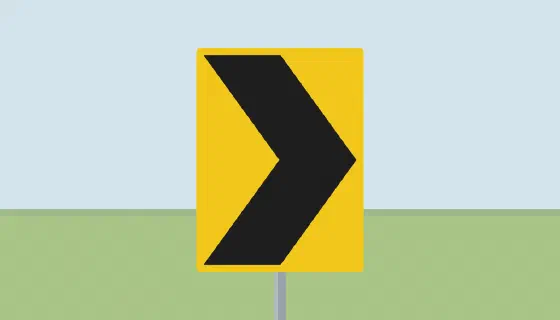
A chevron points the way the road turns and is posted along sharp curves to guide drivers through them. This one points right, so slow down and follow the sharp curve to the right.

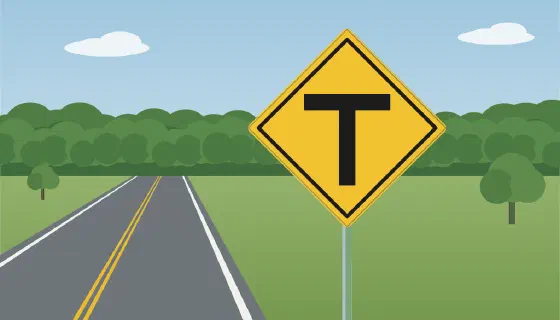
A T symbol means your road comes to an end where it meets a cross street, so you cannot continue straight. Reduce speed, prepare to turn either left or right, and give way to cross traffic where required.

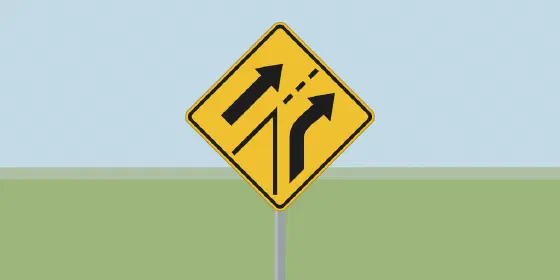
Two arrows divided by a dashed lane line show that the road joining from the right continues in a lane of its own, so its traffic does not have to merge. Still watch for vehicles in the new lane, because some of them may change lanes later.

The curved arrow on the left ends up running beside the straight arrow, separated by a broken lane line, so the sign shows an extra lane being added on the left. Vehicles entering from that side get a lane of their own and do not have to merge.

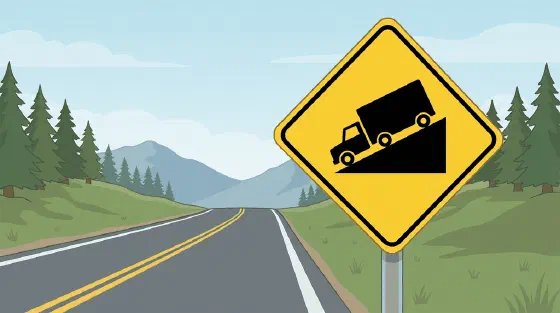
A truck tilted on a slope is the symbol for a hill, warning of a steep grade ahead. Slow down before heading downhill and use a lower gear to hold your speed instead of riding the brakes; a truck crossing sign would show a truck on level ground.

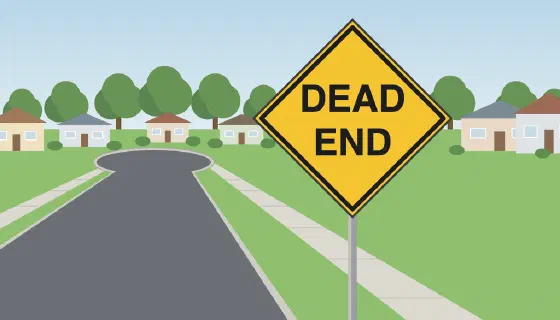
A DEAD END sign warns that the street does not connect to any other road, so you will have to turn around to get out. Drive in only if you need to reach a place along that street.

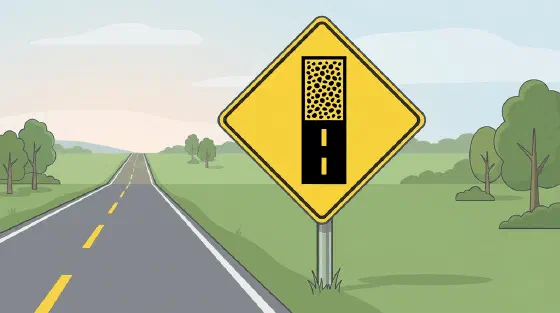
The symbol shows a paved road turning into a rough surface, warning that the pavement stops and the road continues as gravel or dirt. Slow down before the change, because loose surfaces give your tires less grip.

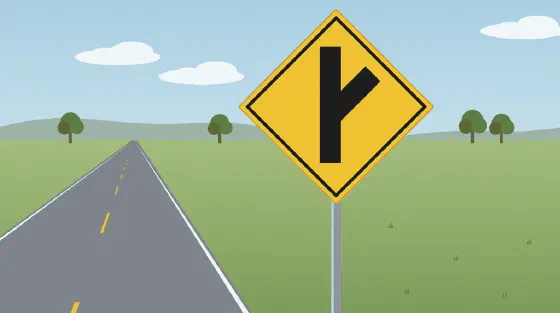
The branch leaving the main line on a diagonal shows a side road meeting yours at an angle from the right. Angled junctions make approaching vehicles harder to see, so reduce speed and watch for traffic turning in or out.

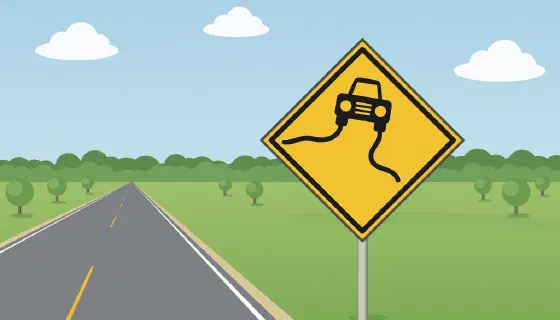
The car with wavy skid marks warns that the road can become slick when wet. Reduce speed, leave extra following distance and avoid hard braking or sharp steering.

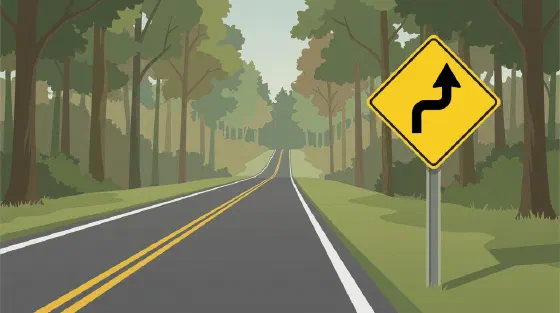
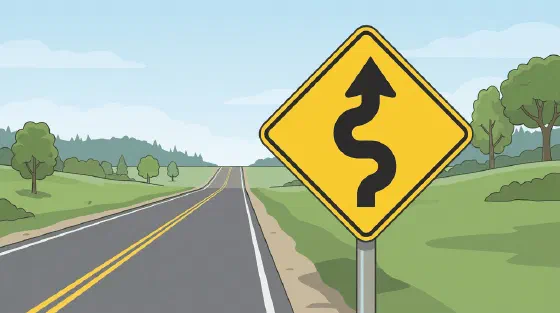
A snaking arrow marks a winding road, meaning a series of curves one after another. Slow down before the first bend and keep a steady speed through the whole stretch rather than braking hard in the curves.

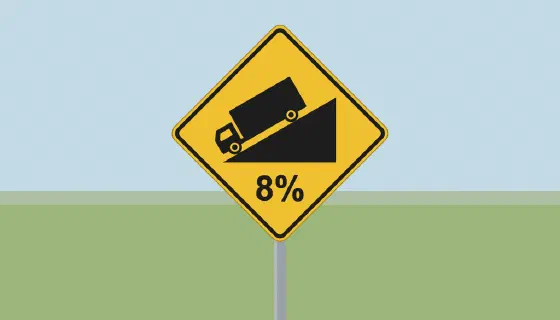
A truck pictured on a slope with the figure 8% warns of a steep downhill stretch where the roadway falls roughly 8 feet over every 100 feet. Before starting down, shift into a lower gear so the engine helps hold your speed in check.
Every question in this set has its own page with the correct answer and an explanation.