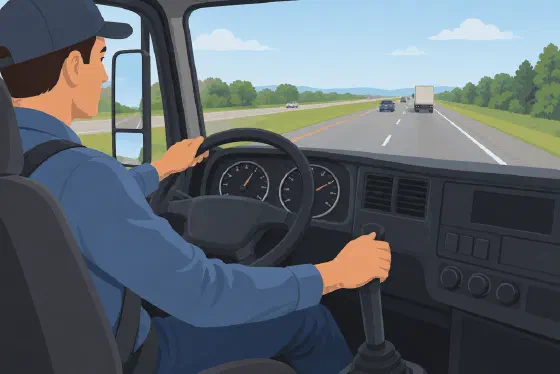
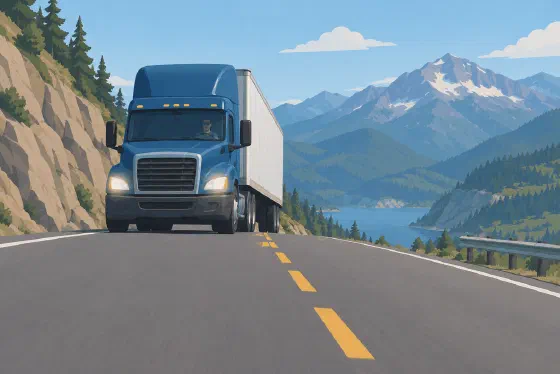
Which of the following is good downshifting practice?
Why it's B: If a curve calls for a lower gear, shift down before you enter it.
Slowing down and selecting the lower gear before a curve lets you apply some power through the bend, which keeps the vehicle stable, and lets you accelerate on the way out. On a downgrade you likewise shift down before the descent begins, and a double-clutch downshift calls for raising, not lowering, the rpm while in neutral.
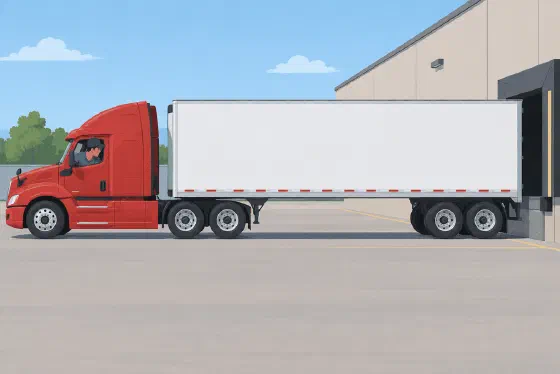
Whenever you get out of your vehicle and walk away, which step is essential?
Why it's C: Apply the parking brake
The parking brake is what holds a parked vehicle in place, so set it every time you get out, even when the ground looks level. Turning the wheel hard left is not a general rule, and the engine should not be left running.
What is the main advantage of backing toward the driver's side?
Why it's A: You can see better by watching the rear of the vehicle through your side window
Backing toward the driver's side lets you look straight back along the vehicle from your own window. Backing toward the right, or blind, side is much riskier because you see far less.
What could happen if you force an automatic transmission down into a low gear while the vehicle is moving fast?
Why it's B: Complete loss of engine braking
Forcing an automatic transmission down a gear at high speed can damage it and leave you with no engine braking at all, which is especially dangerous on a downgrade. Select the lower range before starting down a grade, while your speed is still low.
What is the advantage of backing toward the driver's side?
Why it's A: You can see better by watching the rear through your side window
From the driver's seat you can look out the side window and watch the rear of the vehicle as you back, a far better view than the mirrors alone give you when backing toward the right. It is a safety practice rather than a legal requirement, and using a helper is still recommended.
Which shifting technique do most heavy vehicles with a manual transmission require?
Why it's B: Double clutching
Most heavy vehicles with a manual transmission call for double clutching: press the clutch and shift to neutral, let the clutch out while engine speed adjusts to the next gear, then press the clutch again and move into that gear.
Which statement about speeding up a commercial vehicle is accurate?
Why it's C: Speeding up roughly can damage the vehicle's mechanical parts.
Abrupt starts strain the engine and driveline and, when you are pulling a trailer, the coupling as well, so speed up smoothly and gradually. A jerky feel is a sign of poor technique, and on slick surfaces extra power just makes the drive wheels spin.
As you speed up, the drive wheels lose traction and start spinning. What should you do?
Why it's A: Lift your foot off the gas pedal
When the drive wheels spin, they have broken loose from the road surface. Taking your foot off the pedal lets them slow down and bite again, whereas extra power just makes them spin faster and can send the vehicle sliding sideways.
Your truck has a manual transmission, and you had to stop on the shoulder of an uphill grade. What is a good practice when you start moving up the hill again?
Why it's B: Hold the truck with the parking brake until the clutch engages
The parking brake keeps the truck from rolling backward while you let the clutch out and give it power; release the parking brake once there is enough power to keep from rolling back. Riding the clutch wears it out quickly, and letting the truck roll back is dangerous.
Which practice is correct when you have to back up a school bus?
Why it's C: Check the mirrors on the left and right sides
Using the mirrors on both sides, not just one, lets you watch both sides of the bus and as much of the area behind it as the mirrors can show while you reverse. Back up slowly and, when possible, post a lookout outside the bus to warn you of people, vehicles, or obstacles.
What helps keep a truck from rolling backward as you pull away from a stop?
Why it's C: All of these are correct.
Rolling back when starting can cause a collision with the vehicle behind you. With a manual transmission, start letting out the clutch before your foot leaves the brake, and leave the parking brake on until the engine is supplying enough power to hold the vehicle in place.
Tip When each technique listed is a sound one, the answer that covers all of them is generally the one to choose.
How should your hands be placed on the steering wheel?
Why it's A: Spread apart, one hand on each side of the wheel
A firm grip with the hands on opposite sides of the rim, around the 9 and 3 o'clock positions, gives the most leverage for a quick, controlled turn. Hands bunched together cannot turn the wheel as far or as fast.
Which of these is the safest approach when you have to back up a truck?
Why it's B: Walk around the truck to check the path before you start
Mirrors cannot show everything around a large vehicle, so get out and look over the area yourself, checking for people, objects, and clearance overhead and to the sides before you back. Staring straight ahead or trusting the mirrors alone can leave hazards unseen.
What is good practice when you back up a large vehicle?
Why it's C: Get a helper to guide you whenever you can
A large vehicle has big blind spots, so a helper standing where you can see them can warn you about hazards you cannot see; agree on hand signals first, including one for stop. Back as slowly as possible and check both side mirrors often.
Prior to walking off and leaving your vehicle unattended, what should you do?
Why it's C: All of these are correct
Securing an unattended vehicle takes several steps: set the parking brake so it cannot roll, turn off the engine, and take the keys so no one else can drive it away. Each of the listed actions is part of that routine.
What two things can tell you when it is time to change gears?
Why it's A: Road speed and engine rpm
Drivers judge shift points either by engine speed, watching the tachometer for the right rpm, or by road speed, knowing which mph range each gear covers. Traffic, following distance and weather affect how you drive, but they do not tell you when to shift.
What is a sound rule for backing up a large, heavy vehicle?
Why it's B: Whenever possible, avoid having to back up.
Much of the area behind a heavy vehicle is hidden from view, which makes backing risky; plan routes and parking spots that let you pull forward whenever you can. When you must back, back toward the driver's side and use a helper who stays in sight and gives hand signals you both agreed on.
Which precaution is wise when it comes to reversing a heavy vehicle?
Why it's C: Avoid having to back up whenever you possibly can
Reversing a big vehicle is risky even with someone guiding you, so the best plan is to arrange routes and parking so that you seldom need to back up. When backing cannot be avoided, keep your helper in view and back toward the driver's side, where you can see better.
CDL general knowledgeKeyboard: A · B · C · D · Enter
As a bus driver, when should your seat belt be fastened?
Why it's A: Every time you drive
Buckle up on every trip, no matter your speed, the distance, or your employer's rules. The belt holds you in the driver's seat so you can stay in control during a hard stop, a sudden swerve, or a crash.
Your drive wheels start spinning as you try to get moving from a standstill. What is the right response?
Why it's A: Release the accelerator pedal.
Wheels that spin have lost traction, and adding power only makes the spin worse. Letting up on the accelerator allows the tires to stop spinning and grip again, while a lower gear would send even more turning force to the wheels.
Which of these does NOT help you decide when to shift gears?
Why it's B: Reading the oil pressure gauge
You can time a shift by watching the tachometer for the right rpm or by learning which road speeds suit each gear. The oil pressure gauge warns you about engine lubrication and plays no part in choosing a gear.
What is correct about shifting gears and double clutching?
Why it's C: The tachometer can show you the right moment to change gears.
While double clutching, the tachometer shows when engine rpm is in the right range to shift; you can also go by road speed. Double clutching is the normal way to shift a non-synchronized transmission, whatever the load or road surface.
Set the parking brake each time you park, on level ground or a slope, so the vehicle cannot roll away. It is not a tool for hard stops or for driving in bad weather.
A retarder is a separate device that holds the vehicle back, so it slows you down and lets you lean less on the service brakes, which means less brake wear and an extra way to control your speed.
Which statement about reversing a large truck is correct?
Why it's B: It is best to avoid reversing whenever you have another option
A large vehicle has big blind spots behind it, so plan where you park and stop so that you can pull forward instead of backing. If you must reverse, curve toward the driver's side where you can see best, and use a helper who stays in view and gives hand signals you agreed on beforehand.
Why it's C: Whenever you travel in a moving vehicle
A belt protects you only when it is buckled, so wear it on every trip, short or long, at any speed and in any seat; it keeps you in place and in control and greatly lowers your risk of serious injury in a crash.
What makes backing toward the driver's side the better choice whenever possible?
Why it's A: Through your side window, you can see the back of the vehicle.
When you back toward the driver's side, you can see the back of your vehicle straight through the side window rather than depending on mirrors alone. You still need to back up slowly and keep checking both mirrors.