DMV Written Test home
CDL · Slippery Roads and HydroplaningQuestion 1 of 20 · untimed
Save & exit

CDL Slippery Roads and Hydroplaning Practice Test

Night and weatherKeyboard: A · B · C · Enter

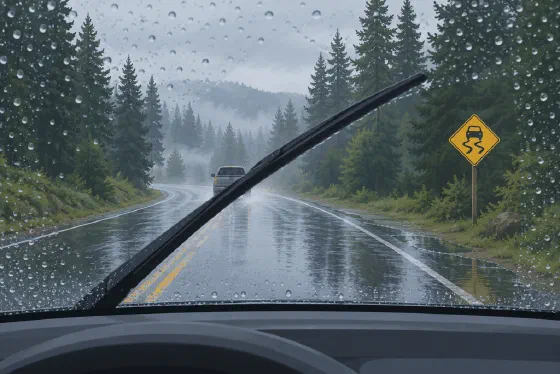
What causes a bus to hydroplane?

Found a mistake? Report this question or use the form

All questions in this set with answers

Every question in this set has its own page with the correct answer and an explanation.

  1. What causes a bus to hydroplane?
  2. How should you respond when your vehicle begins to hydroplane?
  3. Your vehicle starts to hydroplane on a wet road. What should you do?
  4. When is the road surface usually at its most slippery?
  5. When deep puddles or moving water cannot be avoided, what helps keep your brakes effective?
  6. Glare ice has left the highway extremely slick. Which of these is a sensible action?
  7. When should you be especially alert for black ice?
  8. When a road like the one shown is wet, by roughly how much should you lower your speed?
  9. Which of these should you avoid doing on a slippery road?
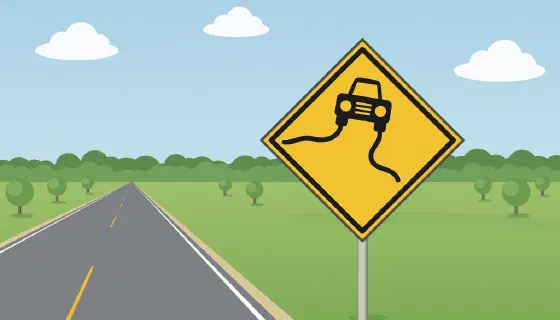
  10. Slippery when wet: A driver approaching this sign should be ready for:
  11. Which statement about hydroplaning is true?
  12. What should you do when driving on slippery pavement?
  13. Under what conditions should you be on the lookout for black ice?
  14. If your route takes you through deep or swiftly flowing water, which of these is a mistake?
  15. What causes hydroplaning?
  16. On a cold day, the temperature climbs just enough for ice on the road to start melting. What happens to the road surface?
  17. Which of these problems can occur when your brakes get soaked in heavy rain or deep water?
  18. On a slick road surface, which of these actions should you avoid?
  19. Hydroplaning is most likely where water has pooled on the pavement. What can warn you that water is standing on the road?
  20. Regarding the distance needed to bring a vehicle to a stop, which statement is correct?

More CDL practice tests