DMV Written Test home
CDL · Pulling Doubles and TriplesQuestion 1 of 24 · untimed
Save & exit

CDL Pulling Doubles and Triples Practice Test — 24 Questions

Doubles and triplesKeyboard: A · B · C · Enter

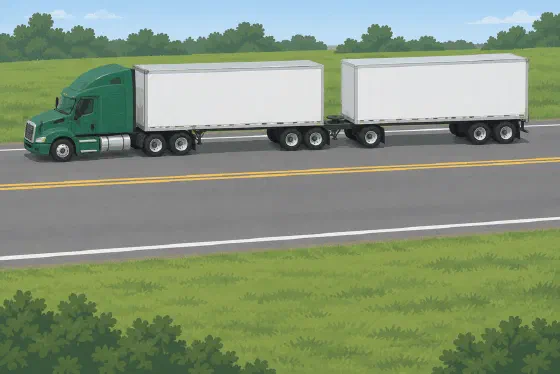
Compared with other kinds of commercial vehicles, how stable are double and triple combinations?

Found a mistake? Report this question or use the form

All questions in this set with answers

Every question in this set has its own page with the correct answer and an explanation.

  1. Compared with other kinds of commercial vehicles, how stable are double and triple combinations?
  2. A hazard forces you to make an emergency stop while towing double trailers. How should you brake?
  3. Counting every joint where connected units can pivot, how many articulation points does a standard double-trailer combination have?
  4. Compared with driving a smaller vehicle, what does pulling doubles or triples require of you?
  5. In a B-train (B-double), at how many points can the combination pivot?
  6. Which statement about making sudden steering moves with a double or triple trailer combination is accurate?
  7. During normal driving, which control applies the trailer brakes on a double or triple combination?
  8. In a set of triples, which position is safest for the lightest trailer?
  9. Which of these best describes safe driving with doubles or triples?
  10. To begin training as a triple-trailer driver, federal rules say you must first have:
  11. Your 100-foot double-trailer rig is traveling 50 mph on a dry road and visibility is good. What is the smallest following gap, in seconds, you should leave behind the vehicle ahead?
  12. Which unit is most likely to roll over because of the crack-the-whip effect?
  13. What kind of parking space is best for a set of doubles or triples?
  14. How does the rollover risk of doubles and triples compare with that of single-trailer rigs?
  15. Pulling a set of doubles, you have to brake hard to keep from hitting something. Which braking method should you use?
  16. A truck pulling double trailers is 100 feet long and moving at 30 mph. The pavement is dry and you can see well. At minimum, how many seconds of following space should you leave?
  17. When you pull doubles or triples, why is it important to look farther ahead than usual?
  18. If you pull doubles or triples, which of the following is accurate?
  19. A typical triple-trailer rig is a tractor pulling three semitrailers joined by two converter dollies. How many pivot (articulation) points does it have?
  20. You are pulling doubles and the trailer wheels begin to skid. What is the most likely result?
  21. Which of these is good practice when you tow doubles or triples?
  22. In a rig pulling two or more trailers, which trailer belongs in the spot right behind the tractor?
  23. While you are pulling doubles, the wheels of one trailer lock up and start to skid. What is the most likely result?
  24. If a set of doubles includes only a single 28.5-foot pup trailer, what is that configuration called?

More CDL practice tests