DMV Written Test home
CDL · Managing Space Around Your VehicleQuestion 1 of 31 · untimed
Save & exit

CDL Managing Space Around Your Vehicle Practice Test

Following distanceKeyboard: A · B · C · Enter

You drive a vehicle 60 feet long at 50 mph. How much following distance should you keep?

Found a mistake? Report this question or use the form

All questions in this set with answers

Every question in this set has its own page with the correct answer and an explanation.

  1. You drive a vehicle 60 feet long at 50 mph. How much following distance should you keep?
  2. How should you measure the amount of space you are leaving in front of your vehicle?
  3. Regarding the clearance above your vehicle, which statement is correct?
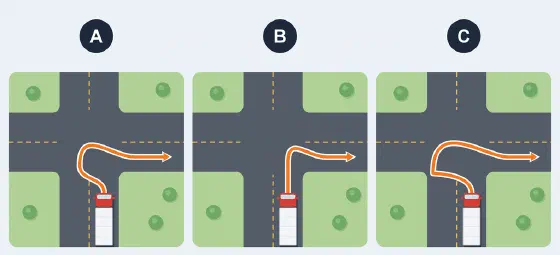
  4. Your long vehicle needs a wide path when it turns. You are about to turn left at an intersection where your street has two left-turn lanes and the cross street has two lanes each way. What should you do?
  5. Which statement about keeping space on either side of your vehicle is correct?
  6. Which approach is safest when you are about to pull a bus out into moving traffic?
  7. Because your vehicle is long, it needs extra room on turns. You are about to turn left from one street onto another, and each has one lane going each way. What should you do?
  8. To complete a right turn, your vehicle will have to use part of another traffic lane. How should you make the turn?
  9. Below 40 mph, a common rule ties your minimum following distance to the length of your vehicle. What minimum does that rule call for?
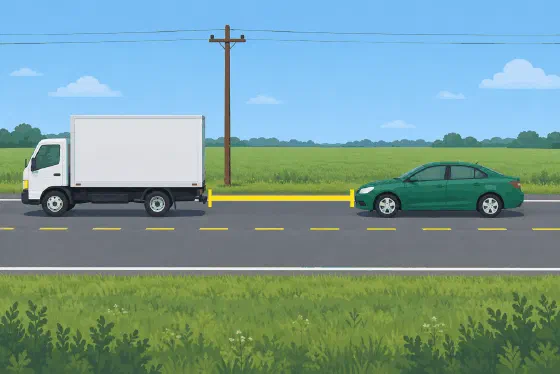
  10. Which method correctly measures the following distance shown in the picture?
  11. What could have lowered the actual clearance under a bridge or overpass since its height was posted?
  12. Which statement about the space to the sides of your vehicle is true?
  13. Your combination vehicle is 50 feet long, and you are cruising at 50 mph in good conditions. At a minimum, how many seconds of following distance do you need?
  14. What is the best practice for handling the space on either side of your bus?
  15. You are behind the wheel of a 30-foot vehicle going 55 mph. What is the minimum following distance, in seconds, that you should keep?
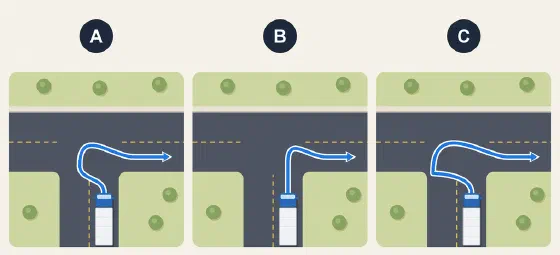
  16. Your vehicle is too long to turn right without swinging wide. Both streets at the intersection have a single lane in each direction. Which figure shows the proper path for the turn?
  17. Your vehicle is long and needs extra room to turn. At an intersection of two-lane, two-way streets, how should you make a left turn?
  18. You need to make a right turn at a corner where two streets with a single lane each way meet, and your truck is too long to clear the corner without a wide swing. Which figure shows the correct way to make the turn?
  19. You are about to cross or pull into traffic in a heavy vehicle. What should you keep in mind?
  20. When you drive in daylight on a slick road, how should you change your following distance, according to the CDL manual?
  21. Your bus is ready to leave a stop. What should you do before moving back into traffic?
  22. What is the correct way to enter an expressway?
  23. When it comes to keeping enough room around your vehicle, which statement holds true?
  24. On dry pavement in good visibility, what is the least following distance you should leave when driving a 30-foot bus?
  25. A driver behind you is following much too closely. What should you do?
  26. How can you measure the gap you are keeping between your vehicle and the one ahead?
  27. When the road is dry and visibility is good, how much time should separate a 40-foot bus traveling at 50 mph from the vehicle ahead of it?
  28. How many seconds of following distance, at the very least, does a 40-foot bus need at 50 mph when the road and visibility are both good?
  29. You are following a vehicle that is smaller than yours. What can you expect?
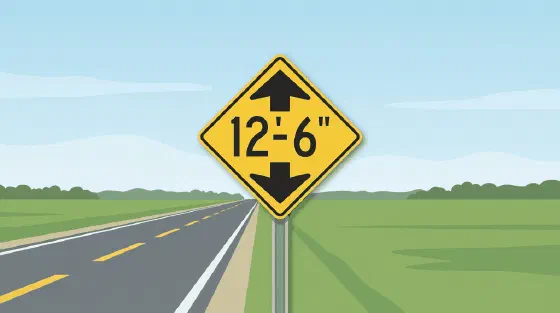
  30. Low clearance 12 ft 6 in: This yellow diamond sign is warning you about:
  31. The road is slippery, and it is daytime. What does the CDL manual advise about your following distance?

More CDL practice tests