Cargo inside your box trailer has caught fire. What is the right action?
Why it's C: Keep the trailer doors closed
Opening the doors lets a rush of fresh air in, and the added oxygen can make the fire flare up and spread fast. Keep them closed, especially if the load includes hazardous materials, and call for help.
Fire breaks out on your truck while you are on the road. What is the safest way to respond?
Why it's A: Pull over in an open area
An open spot with nothing nearby that can burn keeps the fire from spreading to buildings, trees, brush, or other vehicles. Driving faster only feeds the fire more air.
You have been forced to stop on a two-way road with a single lane each way, and a hill keeps drivers approaching from behind from seeing your vehicle. What is the greatest distance behind your vehicle at which you may need to place a warning triangle?
Why it's B: 500 feet
On a two-way road the rear triangle normally goes about 100 feet back, but when a hill or curve keeps approaching drivers from seeing your vehicle in time, move it back beyond the obstruction, as far as 500 feet, so they get enough warning.
Which statement about the causes and prevention of vehicle fires is correct?
Why it's C: Poorly ventilated cargo is a frequent cause of fires.
Cargo without enough airflow can let flammable vapors collect, which is one of the recognized causes of truck fires. Damaged insulation can also spark a fire through short circuits, and an extinguisher only helps you put out a fire after it starts; it does not keep one from starting.
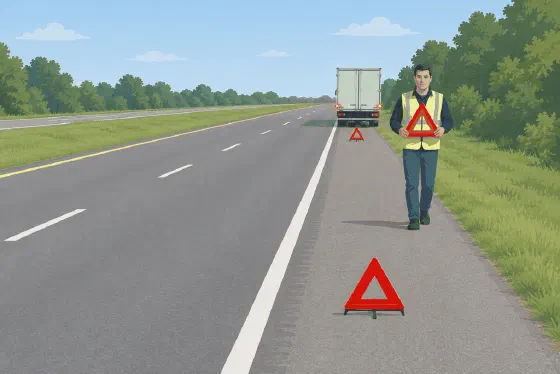
You are forced to pull over and park at the edge of a flat, straight road with one lane in each direction. How should you set out your reflective triangles?
Why it's A: Place one at most 10 feet from the back of the vehicle, a second about 100 feet behind the vehicle, and a third about 100 feet ahead of it.
On a road with traffic in both directions, vehicles can come at you from either side, so one triangle marks the vehicle up close and the other two go about 100 feet out in each direction. Putting both outer triangles behind you, at 100 and 200 feet, is the setup for a one-way road or divided highway.
To protect yourself while placing reflective warning triangles, you should:
Why it's D: hold them so they are between you and oncoming traffic
Holding the triangles between you and the vehicles coming toward you puts their reflective faces in front of approaching drivers first, so they notice you sooner and give you room. Your four-way flashers should stay on while you are stopped.
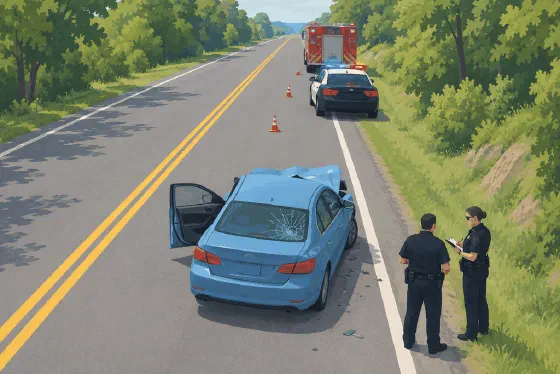
When you stop at a crash scene like this one, which step helps keep a second crash from happening?
Why it's B: Turn on your hazard flashers.
Hazard flashers warn approaching drivers that something is wrong ahead. If you stop to help, park well away from the scene so emergency vehicles have room, and set out reflective triangles where traffic can see them in time.
Which kind of fire is it safe to fight with water?
Why it's C: A fire in a tire
A burning tire must be cooled, which often takes a lot of water. Water spreads a gasoline fire and conducts electricity, so on an electrical fire it can give you a shock; those fires call for the proper extinguisher instead.
At a crash scene, what danger can flares create if they are used carelessly?
Why it's A: A fire, if fuel has spilled onto the ground
A flare burns with an open flame that can ignite spilled fuel or its vapors. Wherever fuel or other flammable liquids may have leaked, use reflective triangles instead of flares.
Tires hold a great deal of heat and can flare up again, so a burning tire needs a large amount of water to cool it. Smothering it with a cloth will not work, and trying to take it off the vehicle exposes you to serious burns.
Which practice for warning traffic about your stopped vehicle is the right one?
Why it's C: If a hill or curve hides your vehicle from drivers behind you within 500 feet, set the rear triangle farther back.
Warning triangles only help if approaching drivers can see them in time, so when a hill or curve blocks the view, the rearmost one goes farther back. They must be set out soon after any stop on the road or shoulder, not just long ones, and taillights alone can make other drivers think the vehicle is still moving.
At a crash scene, which of these is the wrong way to care for injured people?
Why it's A: Keep injured people cool until help arrives
Injured people, especially anyone in shock, should be kept warm, so keeping them cool is the advice to avoid. Letting a trained helper take charge and moving a badly hurt person only when fire or traffic makes it necessary are both sound practices.
When you use a fire extinguisher, which practice is correct?
Why it's B: Point the extinguisher low, at the base of the fire
Spraying the base hits the fuel that is actually burning instead of wasting the extinguisher on the flames above it. Stay as far back as you can while still reaching the fire, and keep the wind at your back so smoke and heat move away from you.